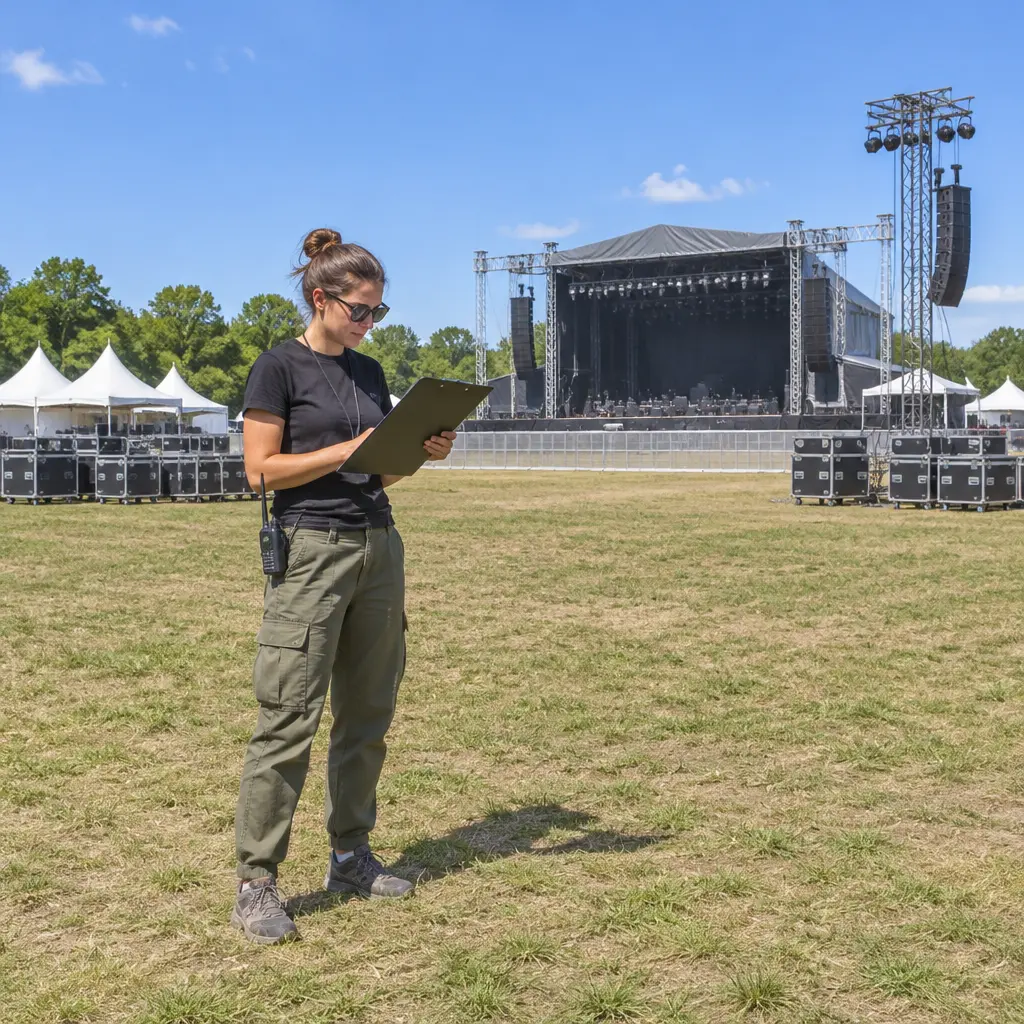
A music festival goal is a specific outcome the event intends to achieve; a success metric is a measurable indicator used to assess progress toward that outcome. Together, goals and metrics help organizers balance artistic quality, audience experience, financial performance, safety, and environmental responsibility. The Event Safety Alliance emphasizes planning and risk management as core event responsibilities, while research by Oxford Economics for U.S. Travel Association estimated that U.S. live events and festivals supported 2.5 million jobs and generated $95 billion in direct spending in 2019. For a festival, the practical lesson is to set a small number of clear goals, assign each a reliable measure and owner, and evaluate results before, during, and after the event.
Define Goals and Success Metrics for a Music Festival
A festival goal describes a desired result, such as improving attendee satisfaction or reaching financial break-even. A success metric is the evidence used to judge whether that result occurred: for example, a post-event satisfaction score or actual net revenue compared with budget. The Project Management Institute’s goal-setting guidance stresses that objectives should be clear and measurable; in festival planning, this means translating broad ambitions into indicators with a defined calculation, data source, target, and reporting date.
Goals are not interchangeable with activities. “Promote the festival on social media” is an activity; “sell 8,000 tickets by the end of the early-bird period” is a measurable objective. A metric is the instrument that tracks it, such as ticketing-system sales by date and sales channel. This distinction keeps teams focused on results rather than counting effort alone.
Strategic goals and SMART objectives
Strategic goals express the festival’s larger purpose, such as establishing a regional cultural event, supporting local artists, or delivering a financially sustainable annual program. SMART objectives make those ambitions specific, measurable, achievable, relevant, and time-bound. For instance: “Increase first-time attendance from the local area by 10% compared with last year, measured through ticket-buyer survey responses, by the final post-event report.” The percentage is a sample target, not an industry benchmark; organizers should set targets using their own baseline and capacity.
Key performance indicators and leading indicators
A key performance indicator (KPI) is a prioritized metric tied directly to a goal. Ticket sales against plan, operating margin, attendee satisfaction, and serious safety incidents may be KPIs. Leading indicators provide early signals, such as the pace of ticket sales, the share of staff who have completed safety training, or the percentage of suppliers that have submitted required documents. Lagging indicators report outcomes after they occur, including final revenue, actual attendance, or post-event satisfaction. Combining both types gives teams time to respond rather than merely explain results afterward.
Outputs, outcomes, and impact
Outputs count immediate delivery, such as performances presented, tickets scanned, or volunteer shifts filled. Outcomes describe changes for participants, such as improved audience satisfaction or stronger awareness of local musicians. Impact concerns longer-term effects, such as increased regional cultural participation or sustained opportunities for artists. A balanced evaluation separates these levels: a full attendance figure is useful, but it does not by itself show whether the festival was accessible, enjoyable, or beneficial to its community.
Set Music Festival Goals Across Core Performance Areas
Once organizers define the measurement framework, they can group goals by the areas that determine whether a festival is viable and valuable. Each goal should have one accountable owner, a calculation method, a target, and a review schedule. The following categories cover the most common trade-offs: attracting an audience, managing money, delivering a safe experience, and creating benefits beyond the festival site.
Attendance, access, and audience experience
Attendance goals measure whether the event reaches its intended audience; experience goals assess the quality and accessibility of that attendance. Useful metrics include paid tickets sold, unique attendees, attendance by day, scan-to-sale rate, repeat attendance, wait times, satisfaction scores, and the proportion of attendees who report that access needs were accommodated. Define “attendance” carefully: tickets sold, tickets scanned, and estimated total site population are different measures.
For example, a festival may target 90% of permitted capacity while setting a separate objective to improve satisfaction with entry queues. Entry time can be measured by sampling the interval between arrival at the queue and ticket scan. Pairing a capacity measure with experience data prevents an attendance target from encouraging overcrowding or obscuring poor service.
Financial performance and commercial outcomes
Financial goals test whether the festival can meet its obligations and continue in future years. Common metrics include gross ticket revenue, net operating result, cost per attendee, average spend per attendee, sponsor revenue, merchandise revenue, and cash-flow variance against budget. State whether figures include taxes, refunds, complimentary tickets, and in-kind sponsorship so that comparisons remain consistent.
A break-even attendance target can be calculated by dividing fixed costs by the contribution margin per paid ticket, where contribution margin is ticket revenue after variable costs. This estimate should be stress-tested for weather, cancellations, and sales uncertainty. Oxford Economics’ 2019 U.S. live-events study illustrates the broader economic scale of the sector, but a national impact estimate is not a substitute for a festival’s own audited budget or local economic assessment.
Safety, security, and operational reliability
Safety goals seek to prevent harm and ensure that the event can respond effectively to foreseeable hazards. Metrics may include reportable incidents per 10,000 attendees, emergency response time, staff training completion, inspection completion, lost-child reunifications, and the number of unresolved critical hazards. A low incident count should not be interpreted alone: reporting culture, event size, exposure time, and incident severity affect how useful the figure is.
The Event Safety Alliance’s guidance treats safety as a coordinated planning responsibility involving organizers, venues, contractors, and emergency services. A practical dashboard therefore tracks preventive measures as well as outcomes. For example, “100% of designated crowd managers complete the required briefing before gates open” is a leading measure; injury and incident reports are outcome measures.
Environmental and community outcomes
Environmental goals can address waste, travel, energy, water, and procurement. Metrics might include kilograms of residual waste per attendee, the percentage of waste diverted from disposal, electricity use per attendee, refill-station use, or the share of audience trips made by public transport, walking, cycling, or shared travel. The Green Events Guide from the United Nations Environment Programme encourages event organizers to consider resource use and environmental impacts across planning and delivery.
Community goals may measure local artist bookings, local supplier spending, paid opportunities for emerging performers, neighborhood complaints, or volunteer participation. These indicators need clear definitions: “local” could mean a specific municipality or region, while “artist opportunity” should distinguish paid bookings from informal exposure. Publishing the definitions helps avoid overstating impact.
Choose Reliable Music Festival Metrics and Targets
A metric is useful only when teams can interpret and reproduce it. Before setting a target, document the metric’s formula, data source, collection timing, responsible person, and limitations. Use historical festival data where available, compare like with like, and avoid presenting a target as an external standard unless a credible source establishes it.
Build a metric definition and baseline
A metric definition should answer five questions: What is counted? What is excluded? How is it calculated? Where does the data come from? When is it reviewed? For example, “ticket conversion rate” could mean completed purchases divided by unique visits to a ticketing page during a specified period. The denominator and time window must be stated because different analytics platforms may count visits differently.
Establish a baseline from prior editions, comparable events, or a pilot measurement. If there is no baseline, describe the first year as a measurement year rather than claiming a precise improvement target without evidence. The U.S. Government Accountability Office’s performance-measurement guidance similarly highlights the importance of defining measures and using reliable information to assess results.
Set targets that reflect capacity and uncertainty
Targets should be ambitious enough to guide action but realistic given venue limits, budget, staffing, and market conditions. Use ranges when uncertainty is substantial, such as a forecast attendance range, and document the assumptions behind it. Scenario planning can model a lower-sales case, expected case, and higher-sales case, allowing organizers to connect trigger points to actions such as reducing discretionary costs or adding transport capacity.
Balance quantitative and qualitative evidence
Quantitative data show scale and change, while qualitative evidence helps explain why outcomes occurred. Ticket scans, incident logs, and spending records can be paired with attendee surveys, artist interviews, staff debriefs, and community feedback. Survey findings should report the number of responses and collection method; a small or self-selected sample may not represent all attendees.
Monitor and Report Music Festival Success
Measurement should follow the festival lifecycle rather than wait for a final report. A concise dashboard helps each team see its responsibilities, identify emerging issues, and make timely decisions. The dashboard should prioritize actionable indicators instead of collecting every available data point.
Pre-event, live-event, and post-event measurement
Before the event, monitor ticket sales pace, budget variance, staffing readiness, permits, supplier documentation, and safety-plan actions. During the festival, track scans, queue conditions, customer-service requests, operational incidents, and transport or waste observations. Afterward, reconcile attendance and finances, collect feedback, review incidents, and compare outcomes with targets and prior editions.
A useful reporting rhythm might include monthly planning reviews, weekly checks as the event approaches, a live operational briefing during show days, and a post-event review within a defined period. The exact cadence depends on the festival’s scale and risk profile.
Use a balanced scorecard and assign ownership
A balanced scorecard groups measures across financial performance, audience and community value, internal operations, and learning or future capability. Each metric should have an owner who can explain its status and initiate a response. For example, the ticketing lead owns sales pace, the safety lead owns readiness indicators, and the sustainability lead coordinates waste and travel data.
A simple text-based dashboard could show: Audience—paid tickets versus target; Finance—forecast net result versus budget; Safety—critical actions completed and incident severity; Environment—residual waste per attendee; Community—local artist and supplier participation. Use status labels consistently, and show both current values and target values so readers can see the gap.
Learn from results and protect data quality
The post-event review should explain variances, identify what worked, and assign follow-up actions with deadlines. Separate factors within the organizer’s control from external influences such as extreme weather or transport disruption. Protect attendee privacy by collecting only necessary information, limiting access, and following applicable data-protection rules. Reliable, responsibly handled data supports better decisions and preserves audience trust.
Conclusion: Turn Music Festival Goals into Measurable Decisions
Effective music festival goals connect a clear purpose to measurable objectives, while success metrics provide evidence of progress. Organizers should cover audience experience, financial performance, safety, environmental responsibility, and community outcomes; distinguish leading indicators from final results; and define each measure with a baseline, target, data source, owner, and review date. The scale of the live-events sector, reflected in Oxford Economics’ estimate of $95 billion in direct U.S. spending in 2019, makes thoughtful evaluation relevant not only to organizers but also to artists, workers, sponsors, and host communities.
Start by selecting a focused set of measures for the next edition, documenting how each will be calculated, and reviewing performance with the people responsible for acting on it. Further reading from the Event Safety Alliance, the United Nations Environment Programme, and the Government Accountability Office can help strengthen safety planning, environmental practice, and performance measurement.
Sources: Oxford Economics and U.S. Travel Association, The Economic Significance of Meetings to the U.S. Economy, 2019, https://www.ustravel.org/research/economic-significance-meetings-us-economy; Event Safety Alliance, Event Safety Guide, https://eventsafetyalliance.org/event-safety-guide/; United Nations Environment Programme, Green Events Guide, https://www.unep.org/resources/report/green-events-guide; U.S. Government Accountability Office, Performance Measurement and Evaluation: Definitions and Relationships, https://www.gao.gov/products/gao-11-646sp; Project Management Institute, A Guide to the Project Management Body of Knowledge (PMBOK Guide), https://www.pmi.org/pmbok-guide-standards/foundational/pmbok.