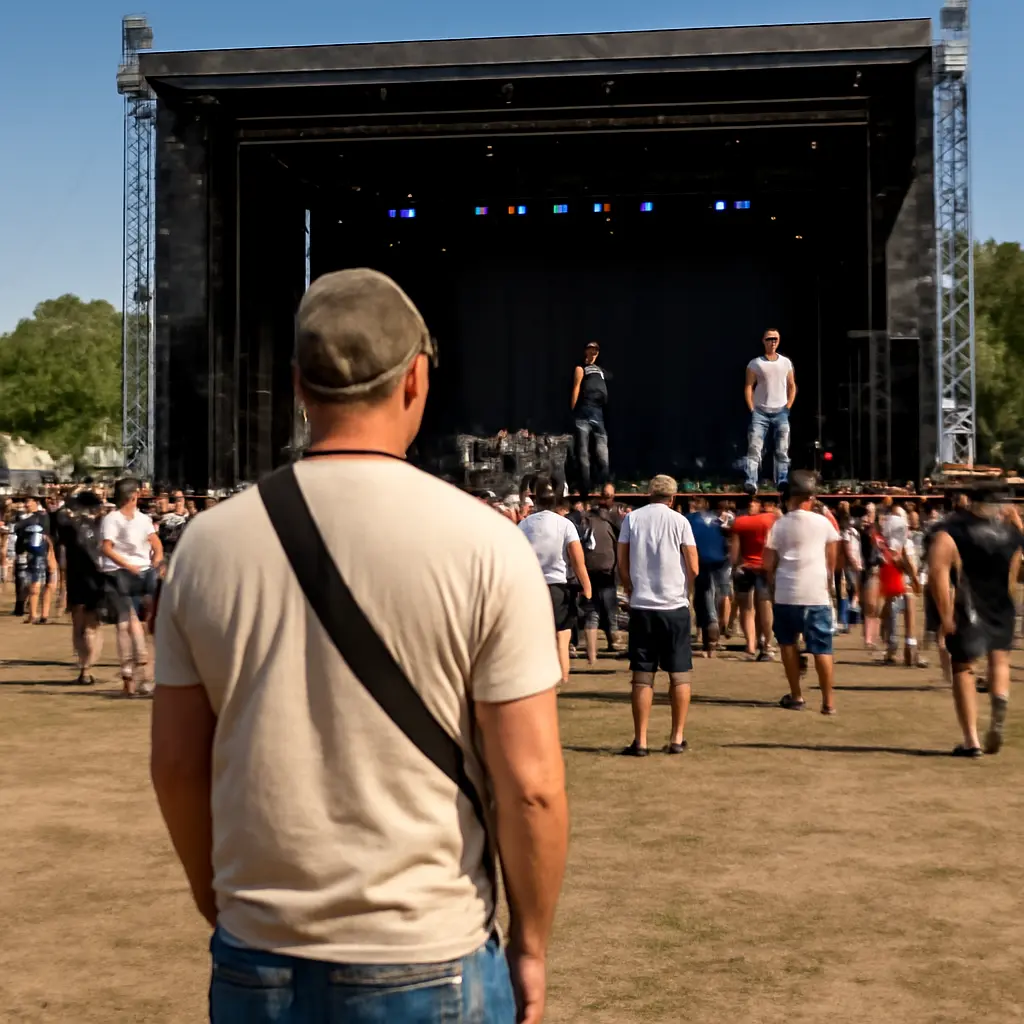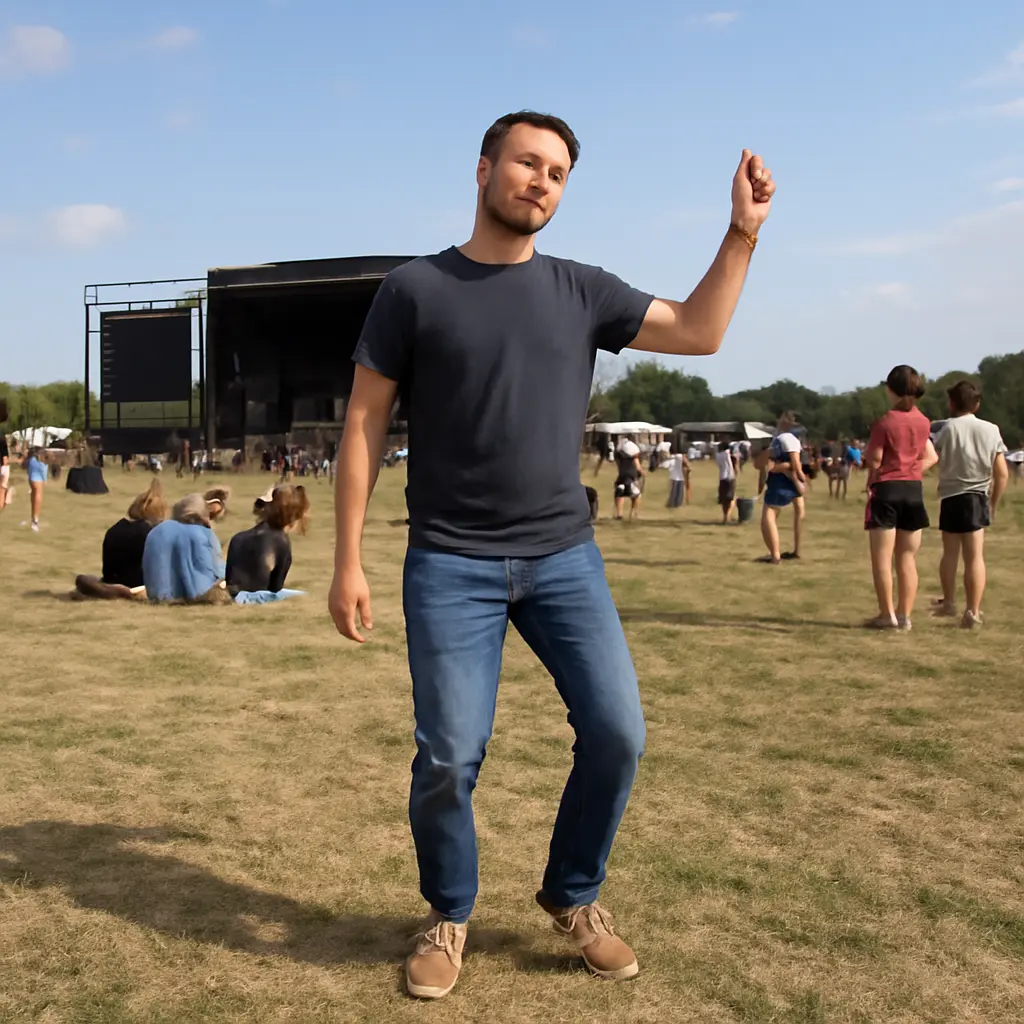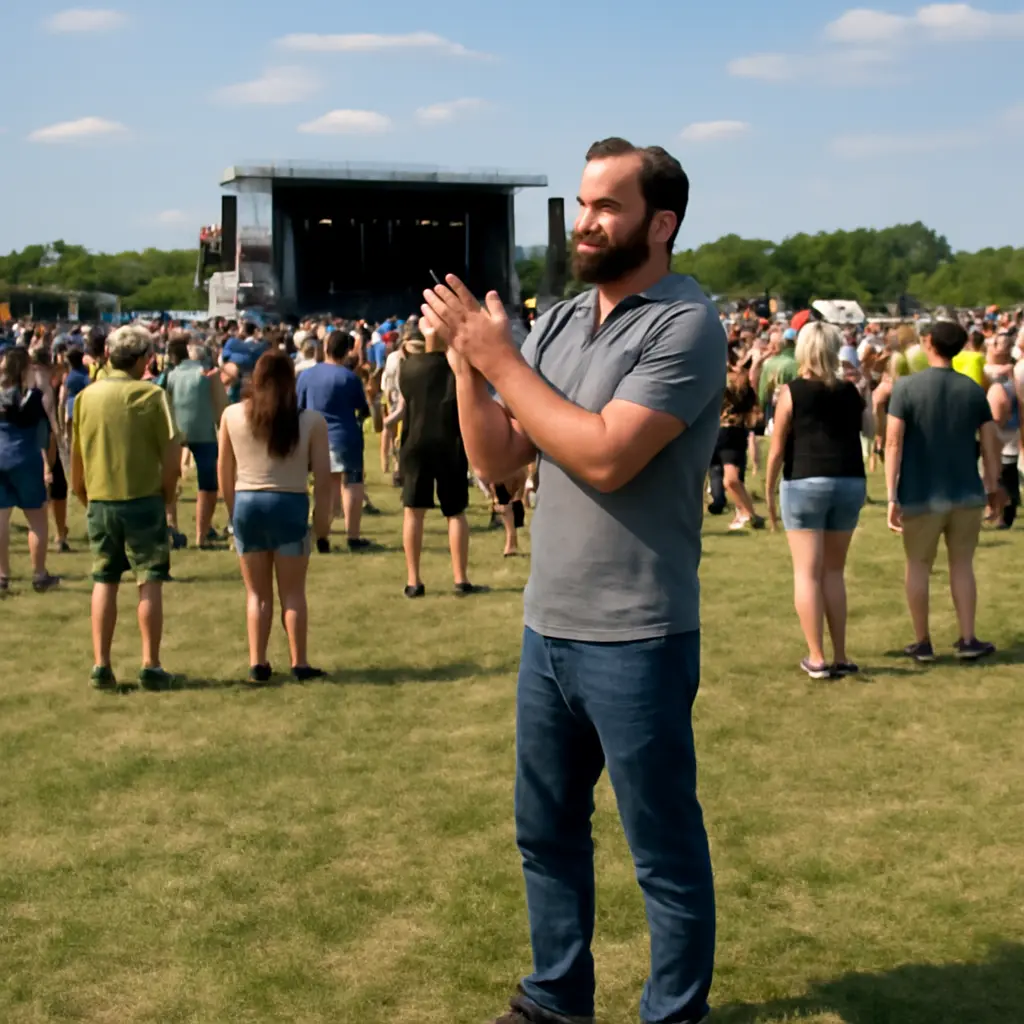
Music festivals are temporary gathering places where people share live performances, public space, and experiences across differences in age, background, and identity. They can break down social walls in four practical ways: creating shared attention through music, encouraging low-stakes interaction, bringing diverse communities into the same space, and building a sense of collective belonging. Research on crowds and live events supports these mechanisms, though festivals do not automatically erase inequality: access, safety, representation, and affordability shape who can participate and feel welcome.
Shared musical attention brings festivalgoers together
Shared attention is the process of focusing on the same event or object at the same time. At a festival, a crowd may sing a chorus, watch a performer, or respond to a beat together. Sociologist Émile Durkheim called the heightened feeling generated by collective ritual “collective effervescence”; later scholarship has used the concept to explain why synchronized group experiences can strengthen social bonds. Music does not make everyone identical, but it offers a common point of focus that can briefly make social distinctions less salient.
Singing and dancing create synchrony
Synchrony occurs when people move or act in time with one another. Clapping, dancing, and singing along can turn a collection of strangers into participants in the same moment. In a 2015 study in the journal Social Psychological and Personality Science, researchers reported that participants who moved in synchrony showed greater cooperation afterward than participants who moved asynchronously. That laboratory finding is not proof that every festival crowd becomes more cooperative, but it offers a plausible explanation for how shared rhythm can encourage connection.
A common performance creates shared reference points
A headline set, local band, or familiar song gives people a subject to discuss even when they do not share a language, occupation, or social circle. The experience can also cross generations: a parent and teenager may know different songs yet share the same stage, sound, and atmosphere. The bridge from shared attention to conversation is simple: once people have experienced something together, they have an easy opening for talking about it.
Low-stakes interaction makes meeting strangers easier
Low-stakes interaction means brief social contact that does not demand an immediate commitment, such as asking where a stage is, complimenting a band shirt, or joining a queue. Festivals provide many such openings because people share practical needs and interests. These exchanges can help strangers move from passive proximity to friendly contact, especially when the setting gives them a natural topic.
Queues, food stalls, and shared logistics prompt conversation
Waiting for food, navigating a map, or looking for a stage creates routine reasons to speak. These are small interactions, but repeated friendly encounters can make a large event feel more approachable. The social benefit depends on basic conditions: clear signage, accessible facilities, well-managed queues, and staff who can help people feel safe rather than pressured.
Interest-based meeting points create natural introductions
Dance areas, genre-specific stages, workshops, and artist merchandise stalls bring together people with at least one shared interest. That common ground can reduce the awkwardness of starting a conversation. Festival organizers can strengthen this effect through community activities and inclusive programming, while making sure participation remains voluntary and that quiet spaces are available for people who find crowds overwhelming.
These spontaneous encounters matter most when people can arrive and participate on fair terms. That leads to a third mechanism: festivals can place groups that rarely share everyday spaces in the same public setting.
Diverse festival spaces encourage contact across social boundaries
Intergroup contact is interaction between people who identify with different social, cultural, or demographic groups. Psychologist Gordon Allport’s contact hypothesis proposed that contact can reduce prejudice under favorable conditions, including shared goals, cooperation, and support from institutions. A festival can provide some of those conditions through a common program and shared public space, but mere proximity is not enough: contact is more likely to be constructive when the event is inclusive, respectful, and safe.
Mixed lineups can widen cultural exposure
A lineup that includes different genres, local artists, and performers from varied communities can invite audiences to encounter music beyond their usual listening habits. UNESCO’s 2005 Convention on the Protection and Promotion of the Diversity of Cultural Expressions recognizes the importance of cultural expression and exchange. In practice, representation depends on more than booking: organizers also need to consider who receives prominent time slots, how artists are compensated, and whether the event communicates respectfully about the traditions it presents.
Shared public space can support local connection
Community festivals can bring residents, visitors, artists, businesses, and civic organizations into a shared setting. The National Endowment for the Arts has documented how arts participation can support community engagement and social connection, while also emphasizing that outcomes vary by program and context. Local partnerships—such as featuring neighborhood performers or working with community organizations—can make a festival feel connected to its host city rather than simply staged within it.
Bringing different people together is only the start. The most durable social effect comes when participants feel that they belong, and when the event’s design allows them to take part without having to ignore barriers or compromise their safety.
Collective belonging turns a temporary crowd into a community
Collective belonging is the feeling of being accepted as part of a group. Festivalgoers may experience it through shared rituals, visible participation, and the sense that their presence matters. The idea connects with social identity theory, developed by Henri Tajfel and John Turner, which explains how group membership can shape a person’s sense of self. A festival can create a temporary identity—such as fans of a particular artist or participants in a local celebration—without requiring people to abandon their other identities.
Rituals and symbols make participation visible
Festival wristbands, flags, call-and-response chants, and repeated songs can act as symbols of shared participation. These rituals help people recognize one another as part of the event, even if they have never met. Their value is strongest when the symbols are welcoming rather than exclusionary and when attendees can participate in different ways, including sitting, listening, or taking breaks.
Access and safety determine who can belong
Belonging depends on whether people can actually attend and feel safe. Ticket prices, transport, disability access, language, crowd management, harassment policies, and the availability of water and quiet areas all influence participation. The World Health Organization’s guidance on mass gatherings emphasizes planning for public health and safety; these practical measures also affect whether attendees can enjoy the event and connect with others. Inclusion is therefore not just a message in festival marketing—it is a matter of planning, staffing, facilities, and accountability.
A useful way to summarize the four mechanisms is a simple sequence: shared music creates common attention; common attention opens low-pressure conversations; inclusive programming brings different groups into contact; and accessible, safe participation supports belonging. A diagram of this sequence could help organizers assess where an event is succeeding and where barriers remain.
Conclusion: festivals can create connection when inclusion is built in
Music festivals can break down social walls by synchronizing attention, making interaction with strangers easier, bringing diverse communities into shared spaces, and creating a temporary sense of collective belonging. Research on synchrony, intergroup contact, social identity, and arts participation helps explain why these experiences can foster connection. But no festival is automatically inclusive: affordability, access, representation, and safety determine who gets to share in the benefits.
For organizers, the practical next step is to measure more than attendance: ask who feels welcome, remove access barriers, support diverse artists, and provide clear ways to report and address harm. For festivalgoers, choosing community-led events and engaging respectfully with people outside familiar circles can help turn a shared set into a more lasting connection.
Sources: Durkheim, Émile, The Elementary Forms of Religious Life, 1912; Reddish, Paul, Ronald Fischer, and Joseph Bulbulia, “Let’s Dance Together: Synchrony, Shared Intentionality and Cooperation,” PLoS ONE, 2013, https://doi.org/10.1371/journal.pone.0071182; Allport, Gordon W., The Nature of Prejudice, 1954; UNESCO, Convention on the Protection and Promotion of the Diversity of Cultural Expressions, 2005, https://en.unesco.org/creativity/convention; National Endowment for the Arts, The Arts and Human Development: Framing a National Research Agenda for the Arts, Lifelong Learning, and Individual Well-Being, 2011, https://www.arts.gov/impact/research/publications/arts-and-human-development-framing-national-research-agenda-arts-lifelong-learning-and-individual-well-being; Tajfel, Henri, and John C. Turner, “The Social Identity Theory of Intergroup Behavior,” in Psychology of Intergroup Relations, 1986; World Health Organization, Public Health for Mass Gatherings: Key Considerations, 2015, https://www.who.int/publications/i/item/public-health-for-mass-gatherings-key-considerations