Artwork reaches festival grounds safely when its transport plan matches the work’s size, materials, fragility, and installation needs. The practical approach is to document and inspect each piece, pack it with suitable cushioning and weather protection, secure it against movement, and coordinate vehicle access and unloading with festival staff. These steps matter because transport damage can affect both an artwork’s appearance and its structural safety; the Smithsonian’s conservation guidance emphasizes that handling, environmental conditions, and physical shocks all influence an object’s condition. The sections below explain how to assess risk, choose packing and transport methods, manage arrival and installation, and learn from established conservation practices.
Artwork Transport Protects Festival Artworks from Handling, Weather, and Impact
Artwork transport is the planned movement of an art object from its origin to its destination while limiting physical, environmental, and security risks. The Canadian Conservation Institute describes preventive conservation as actions that reduce the likelihood of damage or loss, including careful handling, suitable storage, and control of environmental hazards. For festival organizers and artists, the equivalent is a continuous chain of protection: assess the object, prepare it, load it securely, deliver it under agreed conditions, and record its condition at handover.
The relevant categories, or hyponyms, include flat-art shipping, sculpture transport, oversized installation logistics, and transport for interactive or electronic work. Each has different vulnerabilities. A framed print may need glazing protection and rigid support; a freestanding sculpture may need a custom cradle and tie-down points; an installation with electronics may also need protection from moisture, dust, vibration, and power-related hazards. Treating every piece as an ordinary box risks overlooking those differences.
Condition assessment establishes a baseline
A condition assessment records an artwork’s state before it moves so that existing wear can be distinguished from new damage. Photograph each side and any vulnerable detail, note cracks, loose components, surface flaking, unstable joints, and previous repairs, and record dimensions and weight. The Smithsonian Museum Conservation Institute’s object-care guidance stresses documenting condition and handling requirements as part of responsible care. For high-value, fragile, or unusually large works, ask a conservator or experienced art handler to recommend packing and lifting methods.
The assessment should also identify the work’s materials and sensitivities. Acrylic paint, unfired clay, glass, paper, textiles, and mixed-media components respond differently to pressure, vibration, heat, and humidity. Record whether a piece can be lifted by its base, whether it has detachable parts, and whether it must remain upright. This information becomes the basis for the packing plan and the festival’s installation instructions.
Packing creates a protective buffer
Packing is the use of materials and a container to limit movement, impact, abrasion, and exposure during transit. A sound packing system supports the artwork without pressing on delicate surfaces. Use clean, non-abrasive materials appropriate to the object; place protective barriers between the work and cushioning; and keep the object from shifting inside its box or crate. Do not apply tape, adhesive, or plastic directly to an artwork unless a qualified conservator has approved it.
For framed works, protect corners and glazing, and avoid allowing bubble wrap to rest directly against a painted or varnished surface. For sculpture, build a fitted cradle that supports robust structural areas rather than projecting or fragile details. Label packages with orientation and handling instructions, but do not rely on labels alone: the crate should remain protective even if it is turned or jostled. The Canadian Conservation Institute’s preventive-conservation approach supports this layered strategy: reduce hazards through both appropriate materials and careful handling.
Transport Planning Matches Vehicle, Route, and Artwork
Transport planning is the coordination of the vehicle, route, schedule, loading method, and delivery conditions around the artwork’s requirements. A correct box cannot prevent damage if it is crushed by other cargo, left in a hot vehicle, or unloaded without enough people. The plan should specify who is responsible at each handoff, what equipment is needed, and how the work will travel from the vehicle to its installation location.
Vehicle choice and load restraint limit movement
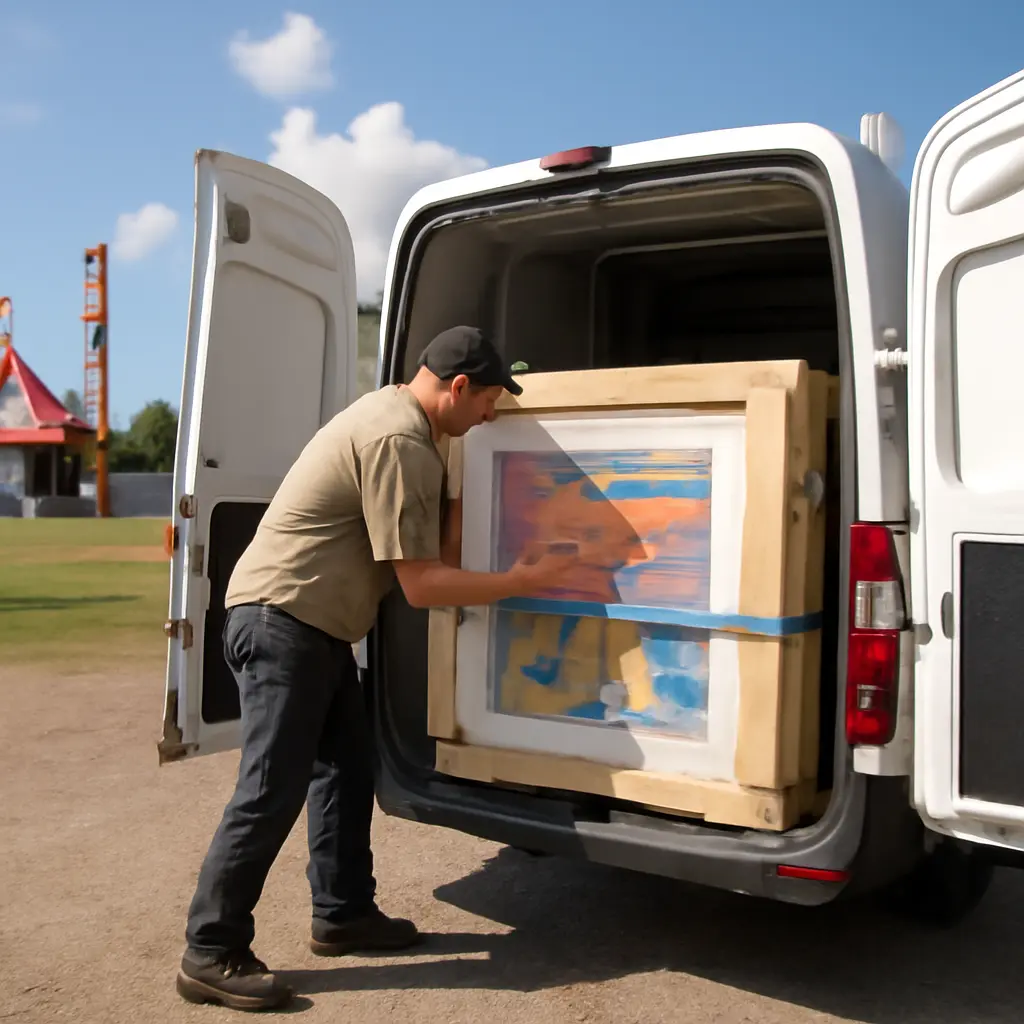
The vehicle must accommodate the artwork’s packed dimensions, weight, orientation, and access requirements. Check door openings, interior height, loading ramps, and the distance from the parking point to the festival site. Secure crates and objects so they cannot slide, tip, or collide with other cargo; use suitable straps and padding, and avoid tightening restraints against vulnerable surfaces. Heavy works may require a liftgate, pallet jack, or professional rigging rather than manual lifting.
As a general safety principle, the U.S. Federal Motor Carrier Safety Administration requires commercial drivers and carriers to secure cargo against movement that could affect vehicle operation. Although festival artists may not be subject to every commercial-carrier rule, the underlying lesson applies: a load must be restrained for the forces encountered during braking, turning, and travel over uneven roads. Follow applicable local transport and workplace-safety requirements, especially for oversized or heavy pieces.
Route and weather planning reduce exposure
Route planning considers road conditions, travel time, vehicle restrictions, site access, and weather exposure. Outdoor festivals may have narrow gates, unpaved tracks, temporary barriers, or limited unloading windows. Confirm the access route and arrival time with the organizer before departure, and check forecasts for rain, high temperatures, or strong winds. Use a waterproof outer cover when appropriate, while ensuring that moisture is not trapped against the artwork.
The National Park Service’s Museum Handbook identifies temperature, relative humidity, light, pollutants, pests, and physical forces among the environmental factors that can affect collections. A festival delivery may not allow museum-grade climate control, but simple precautions—shortening time in a vehicle, keeping work shaded, avoiding direct contact with wet ground, and protecting sensitive materials from rapid environmental changes—can reduce avoidable stress.
Scheduling and handoffs maintain accountability
A handoff is the transfer of responsibility for an artwork between the artist, carrier, festival crew, or installer. Agree in advance on who may accept the piece, where it will be delivered, and how its condition will be checked. Keep contact details, site maps, emergency numbers, and installation instructions with the delivery lead. Photograph the work at loading and arrival, then note any change in condition before signing a delivery receipt.
A simple inventory can include the artwork’s title, artist, crate or package number, dimensions, weight, orientation, handling limits, and destination. For multi-part installations, number components and provide a packing diagram. These records help prevent pieces from being misplaced and reduce confusion when several teams are unloading at once.
Festival Unloading and Installation Preserve Artwork Integrity
Arrival is a high-risk stage because a work may be moved quickly through crowded, temporary spaces. Festival delivery plans should account for the final distance from vehicle to display area, ground conditions, crowd routes, and the tools needed for installation. Unload only when the receiving area and responsible staff are ready; do not leave unprotected artwork beside vehicle routes, food service, or public walkways.
Unloading requires suitable people and equipment
Safe unloading uses enough trained handlers and equipment suited to the object’s weight and shape. Before lifting, identify the center of gravity, gripping points, obstacles, and the route to the installation area. Use a team lift or mechanical aid when a piece is too heavy, awkward, or fragile for one person. The U.S. Occupational Safety and Health Administration recommends planning material handling to reduce hazards such as overexertion and dropped loads; festival crews should follow relevant workplace procedures and avoid improvising lifts.
Keep the work inside its protective packaging until it is near the final location whenever practical. If a crate must be opened outdoors, choose a dry, stable, low-traffic area and retain all packing materials for return transport. Inspect the work after unpacking and compare it with the departure photographs and condition notes.
Installation accounts for wind, public access, and ground conditions
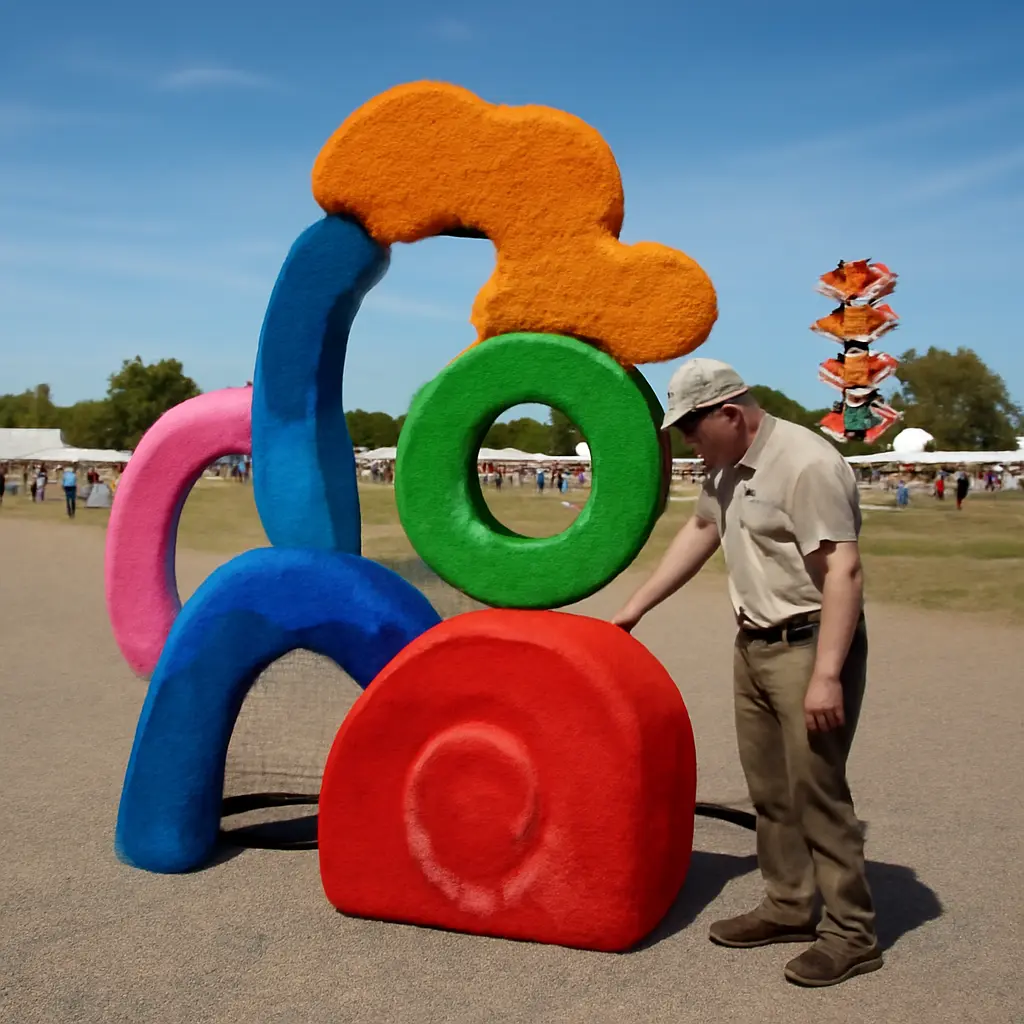
Installation is the placement and securing of artwork at its display site. Outdoor works need stable foundations and attachment methods designed for the expected loads; a sculpture that appears steady in calm weather may become hazardous in wind or on soft ground. Follow the artist’s engineering or anchoring instructions, keep supports and fasteners appropriate to the material, and have qualified professionals assess large, elevated, or load-bearing structures.
Plan barriers or standoff space where visitors could touch, climb on, or collide with a work. Keep artwork clear of emergency routes and accessible paths, and coordinate any power cables or interactive components with site safety staff. The festival’s risk assessment should consider weather, crowd density, trip hazards, and the consequences of a component becoming loose.
Post-arrival inspection closes the transport record
A post-arrival inspection checks whether the artwork has changed during transit and whether it is safe to display. Compare the work with the original photographs, document any new marks or loosened parts, and report concerns before installation continues. If damage is suspected, stop handling the affected area and contact the artist, conservator, or insurer as appropriate. Keep packaging and delivery records until the work has been safely installed and accepted.
For example, a festival receiving a large painted panel can reduce risk by arranging a vehicle with sufficient interior clearance, assigning two trained handlers, delivering during a reserved access window, and inspecting the panel before it is mounted. This coordinated process is more dependable than relying on a “fragile” label or asking available staff to move the piece at the last minute.
Conclusion: Artwork Transport Depends on Preparation and Coordination
Artwork reaches festival grounds safely when condition assessment, protective packing, suitable transport, planned handoffs, and careful installation work together. The central lesson from conservation guidance is to identify hazards before they occur and use several layers of protection rather than relying on a single precaution. Artists should document their work, share handling instructions, confirm site access and unloading arrangements, and inspect the piece after arrival. Festival organizers can help by providing clear delivery windows, trained handlers, safe routes, and secure installation locations. For further preparation, consult a conservator or qualified art handler for fragile, valuable, oversized, or technically complex work.
Sources: Canadian Conservation Institute, “Agents of Deterioration,” https://www.canada.ca/en/conservation-institute/services/agents-deterioration.html; Smithsonian Museum Conservation Institute, “Caring for Your Objects,” https://mci.si.edu/caring-your-objects; National Park Service, Museum Handbook, Part I: Museum Collections, https://www.nps.gov/museum/publications/handbook.html; Federal Motor Carrier Safety Administration, “Cargo Securement Rules,” https://www.fmcsa.dot.gov/regulations/cargo-securement/cargo-securement-rules; Occupational Safety and Health Administration, “Materials Handling and Storage,” https://www.osha.gov/laws-regs/regulations/standardnumber/1910/1910.176.