Festival art installations and crafts turn public celebrations into hands-on opportunities for children to explore, create, and connect. The best activities invite kids to contribute to a shared artwork, use accessible materials, and make choices of their own. That approach aligns with research on arts participation: the National Endowment for the Arts reports that arts engagement can support children’s social-emotional development, while the National Association for the Education of Young Children emphasizes that open-ended creative experiences encourage exploration and problem-solving. From collaborative murals and recycled-material sculptures to simple take-home crafts, thoughtful planning can make festival art welcoming, safe, and memorable.
How Festival Art Installations Engage Children
A festival art installation is a temporary or permanent creative environment that people can experience, interact with, or help make. For children, an installation becomes especially engaging when it offers clear ways to participate rather than asking them only to look. The Association of Children’s Museums describes participatory experiences as opportunities for children to learn through active engagement, a principle that festival organizers can apply to art zones of many sizes.
Good installations balance shared purpose with individual freedom: a child can add one piece to a collective artwork, choose colors or materials, and see how that contribution changes the whole. They also account for different ages, abilities, attention spans, and comfort levels. A clearly marked “watch first” area can be as valuable as a table full of supplies.
Collaborative Murals and Community Canvases
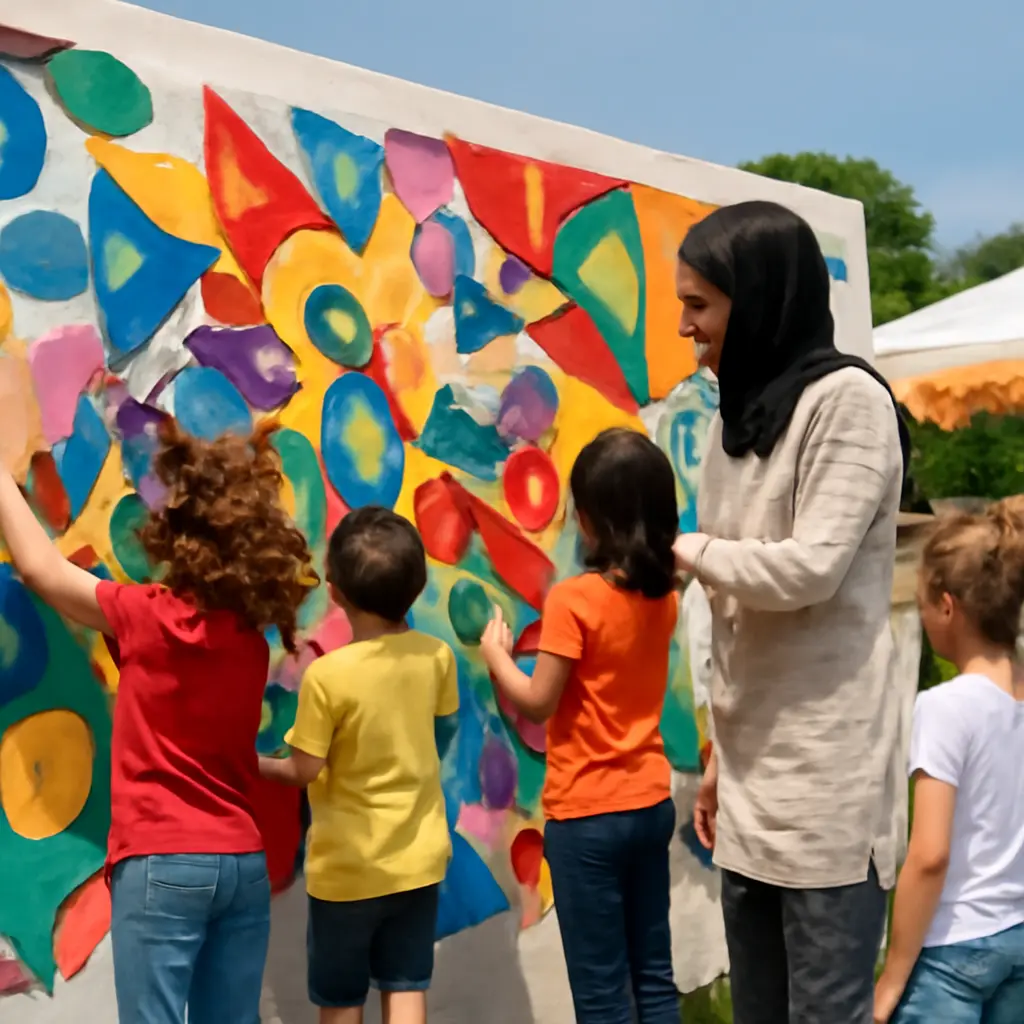
A collaborative mural is an artwork built through contributions from multiple people. At a festival, organizers can divide a large canvas into sections, provide washable paint or broad markers, and invite children to respond to a simple prompt such as “What makes our neighborhood special?” The prompt gives the activity direction without prescribing what each child must draw.
A mural also makes participation visible: children can watch a community image grow as more visitors contribute. The National Endowment for the Arts’ research on arts participation offers a useful rationale for including creative activities in public life, but organizers should avoid claiming that one brief craft guarantees a particular developmental outcome. A practical measure of success is whether children can participate comfortably and whether the finished work reflects varied contributions.
Interactive Sculptures and Sensory Art
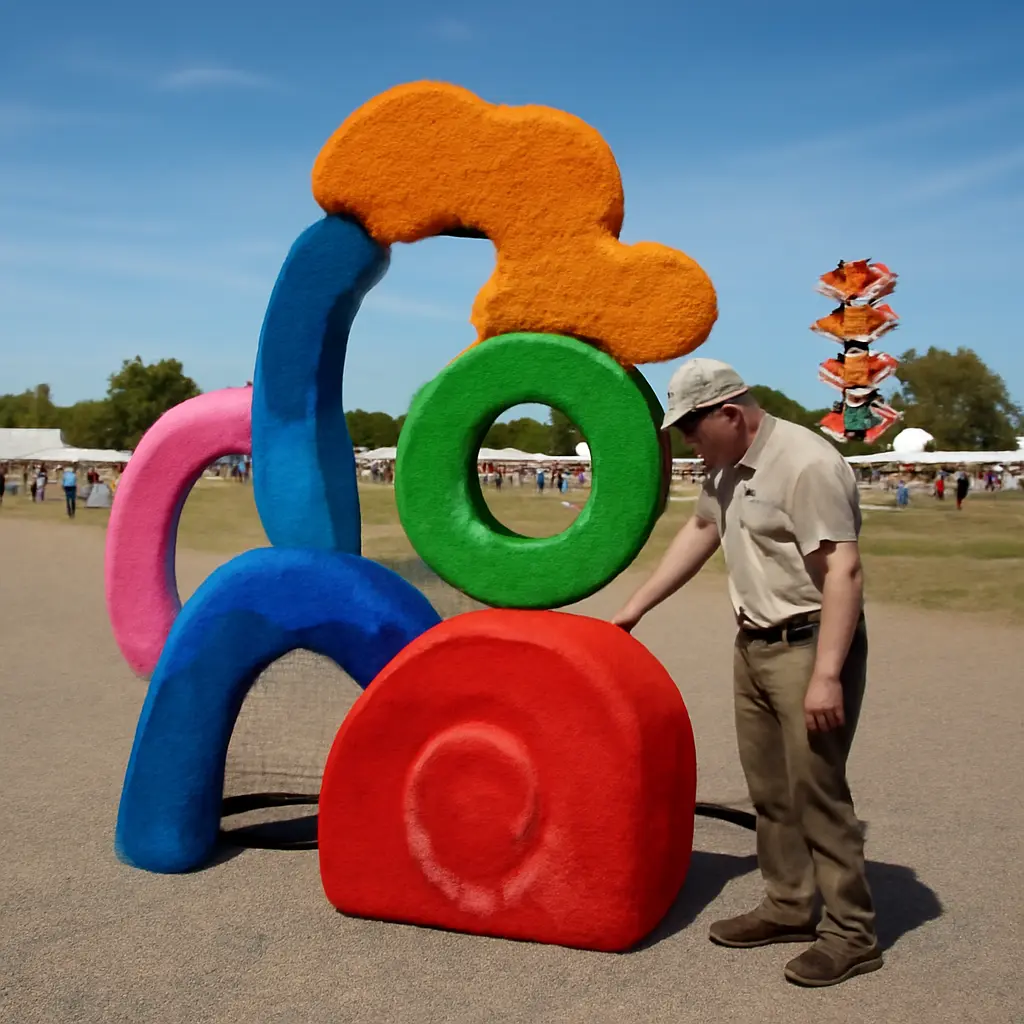
Interactive sculpture is three-dimensional art designed to be experienced through movement, touch, or manipulation. At a family festival, examples might include a cardboard city that visitors can add to, a fabric weaving wall, or a large structure made from lightweight, reusable components. Clear boundaries and sturdy construction help keep interaction safe.
Sensory art offers varied textures, colors, sounds, or motions, but it should not require every child to touch or make noise. Offer alternatives such as viewing, drawing, or using a tool rather than handling materials directly. The Centers for Disease Control and Prevention recommends that children’s activities be matched to their developmental abilities; organizers can apply that principle by providing age guidance, close supervision, and accessible options.
How Festival Crafts Build Creative Participation
Festival crafts are short, structured making activities that allow participants to create an object or artwork. They complement large installations by giving children an individual project they can finish at their own pace. The most effective craft stations pair a simple invitation with room for choice—for example, “Make a festival flag” rather than “Copy this exact flag.”
The National Association for the Education of Young Children advocates developmentally appropriate practice: learning experiences should reflect children’s ages, individual needs, and cultural and family contexts. For festival organizers, that means offering manageable steps, adaptable materials, and instructions that welcome different interpretations.
Low-Prep Crafts for a Range of Ages
Low-prep crafts use familiar, easy-to-handle materials and require little setup. Paper fans, collage postcards, decorated bookmarks, and simple festival badges can work well when supplies are pre-sorted and examples show several possible outcomes. Younger children may need larger pieces and adult help, while older children may enjoy adding patterns, messages, or more complicated construction.
To keep queues moving, organizers can set out duplicate supplies, explain the activity in a few steps, and provide a finished-item display. The American Academy of Pediatrics advises adults to consider age recommendations and supervision when selecting toys and play materials. In a craft setting, that means checking for small parts, sharp tools, choking hazards, and materials that are unsuitable for the youngest visitors.
Recycled and Nature-Inspired Making
Recycled-material crafts turn clean, safe items—such as cardboard, paper tubes, or fabric offcuts—into new creative materials. Nature-inspired activities can invite children to draw leaves, make patterns from fallen materials, or construct a paper habitat. These projects connect art-making with ideas about reuse and the local environment without requiring expensive supplies.
The U.S. Environmental Protection Agency’s waste-management guidance prioritizes reducing and reusing materials before disposal. A festival can reflect that principle by using reclaimed supplies where appropriate, avoiding unnecessary single-use packaging, and explaining which materials can be reused or recycled after the event. Do not collect plants, feathers, or other natural items from protected areas; use responsibly gathered or commercially sourced alternatives.
How Organizers Make Festival Art Safe and Inclusive
A welcoming art zone is planned for varied abilities, languages, sensory needs, and family circumstances. Accessibility is not an extra feature added after the activity is designed: it affects the layout, instructions, materials, staffing, and opportunities to participate. The U.S. Access Board’s guidance on accessible design provides a framework for considering routes, clear floor space, and usable facilities at public events.
Accessible Layouts and Flexible Participation
An accessible art area has a clear route through the space, reachable supplies, stable work surfaces, and room for a child and caregiver to work together. Where possible, provide seating, a quieter alternative, and activities that can be completed standing or seated. Use large-print or illustrated instructions, and avoid making speaking, reading, or fine-motor precision the only way to join in.
Flexible participation can include watching a demonstration, choosing colors, dictating an idea to an adult, or contributing one piece to a shared work. Ask families and disability organizations about local needs when planning, and test the setup before opening. These practical steps help turn inclusion from a promise into a usable experience.
Materials, Supervision, and Clear Instructions
Safe materials are age-appropriate, clearly labeled, and used according to manufacturer directions. Choose non-toxic products intended for children, provide handwashing or cleaning supplies, and keep food and drink away from messy materials. Assign staff or volunteers to demonstrate tool use, monitor the activity, and respond to spills or sharp-object concerns.
Short instructions are easier to follow in a busy festival environment. A useful sign tells visitors what the activity is, who can take part, what materials are involved, and whether the finished item can be taken home. The Consumer Product Safety Commission’s guidance on children’s product safety can help organizers identify age-related hazards and make informed choices about supplies.
How to Plan a Memorable Festival Art Program
A strong art program links its creative activities to the festival’s setting, audience, and available resources. Organizers can begin with a theme, then select a mix of quick crafts and longer collaborative projects so families have options whether they stay for five minutes or an hour. A simple plan also makes it easier to estimate staffing, materials, cleanup, and accessibility needs.
Choose a Theme and Match Activities to It
A theme gives activities a shared thread without requiring them to look alike. A harvest festival might pair a community “garden” mural with paper seed-packet designs; a neighborhood celebration might invite children to build a cardboard map of places they enjoy. Where possible, ask local artists, cultural groups, and families to help shape the theme so it reflects the community rather than relying on stereotypes.
Provide a range of difficulty and duration. A quick collage can serve visitors moving through the event, while a shared sculpture can develop throughout the day. Label activities with approximate time and age guidance, but let families decide what suits their child.
Prepare Staff, Supplies, and Evaluation
Preparation includes setting up activity examples, sorting supplies, testing instructions, and planning a cleanup and waste-sorting routine. Brief volunteers on how to encourage children without taking over their work: ask open questions, offer help when invited, and treat unexpected results as part of the creative process.
Evaluation can be simple and useful. Track participation, note which activities attract different age groups, record supply use, and invite brief feedback from families and volunteers. These observations help organizers improve future events without reducing creativity to a single attendance or output target.
Conclusion: Make Festival Art an Invitation to Create
Festival art installations engage children when they can contribute, explore, and experience a shared creative environment. Crafts extend that invitation through manageable projects, while recycled materials, accessible layouts, age-appropriate supplies, and prepared staff make participation more practical and welcoming. Choose activities that reflect the community, offer more than one way to take part, and gather feedback after the event. A well-planned art zone can turn a festival visit into a chance for children to make something—and to feel that they helped shape the celebration.
Sources: National Endowment for the Arts, Arts and Human Development: Framing a National Research Agenda for the Arts, Lifelong Learning, and Individual Well-Being, https://www.arts.gov/impact/research/publications/arts-and-human-development-framing-national-research-agenda-arts-lifelong-learning-and-individual-well-being; National Association for the Education of Young Children, Developmentally Appropriate Practice, https://www.naeyc.org/resources/position-statements/dap; Association of Children’s Museums, What Is a Children’s Museum?, https://childrensmuseums.org/about/; Centers for Disease Control and Prevention, Child Development, https://www.cdc.gov/ncbddd/childdevelopment/; American Academy of Pediatrics, Toy Safety Tips, https://www.healthychildren.org/English/safety-prevention/at-home/Pages/Toy-Safety-Tips.aspx; U.S. Environmental Protection Agency, Sustainable Materials Management: Non-Hazardous Materials and Waste Management Hierarchy, https://www.epa.gov/smm/sustainable-materials-management-non-hazardous-materials-and-waste-management-hierarchy; U.S. Access Board, Guide to the ADA Accessibility Standards, https://www.access-board.gov/ada/guides/; U.S. Consumer Product Safety Commission, Toy Safety, https://www.cpsc.gov/Safety-Education/Safety-Education-Centers/Toy-Safety