Family-friendly festival facilities are the practical services and spaces that help caregivers meet children’s needs beyond using the restroom. They include clean water, shade, quiet areas, baby-care stations, accessible routes, food options, and clear emergency support. Their importance is measurable: the U.S. Centers for Disease Control and Prevention recommends that people drink more water in hot weather, while the National Weather Service warns that heat can become dangerous quickly, especially for children. A well-planned festival therefore treats comfort, access, and safety as core infrastructure—not extras—and makes each facility easy to find and use.
Festival facilities: the family-support attribute
A festival facility is a physical space, service, or piece of infrastructure provided to support attendees. For families, that definition extends beyond toilets to the everyday tasks of keeping children hydrated, fed, rested, clean, and safe. The Event Safety Alliance’s guidance emphasizes planning, communication, and coordinated operations as foundations of event safety; those principles apply just as directly to family amenities.
The most useful facilities work as a connected system. A water point matters less if it is difficult to reach with a stroller; a quiet tent is less helpful if families cannot find it on the map. Organizers can plan for different ages and needs by grouping amenities around clear routes and marking them consistently on maps, signs, and event apps.
Drinking water and refill points
A drinking-water station provides potable water for drinking and bottle refills. It is especially important at outdoor events, where heat, walking, and waiting can increase fluid needs. The CDC advises people to drink more water in hot weather and notes that young children are among those at greater risk of heat-related illness. Festival operators should identify refill points before opening, keep them accessible, and communicate whether attendees may bring reusable bottles.
Water access should be paired with visible heat information, shaded places to drink, and a plan for replenishing or maintaining stations. If water is temporarily unavailable, signs and staff should direct families to the nearest alternative rather than leaving them to search.
Shade and places to sit
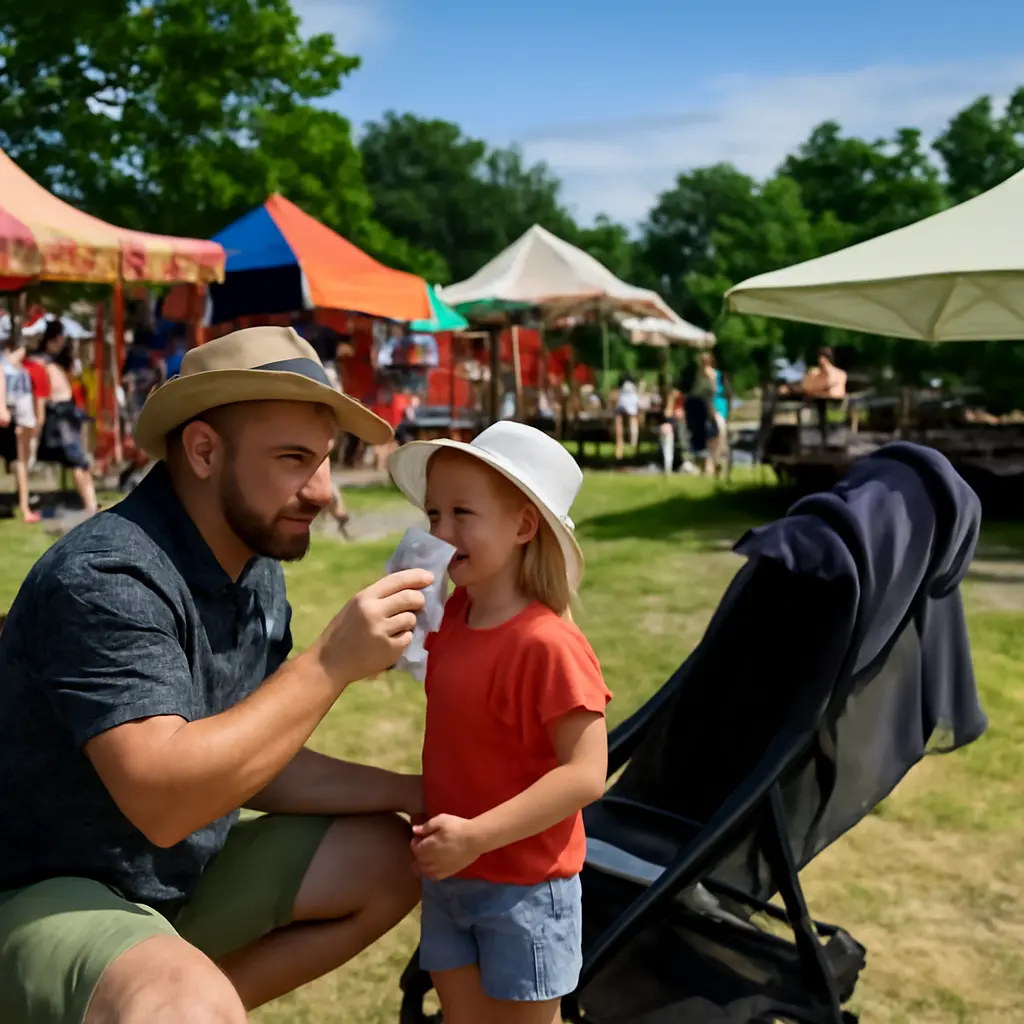
A shade area is a protected space that reduces direct exposure to the sun, while a family seating area offers a place to rest, feed a child, or regroup. These spaces can include trees, canopies, tents, benches, and picnic areas. The National Weather Service explains that heat illness can progress from heat exhaustion to the life-threatening condition of heat stroke, making rest and cooling opportunities practical safety measures as well as comfort features.
Shade should be distributed across the site rather than concentrated in a single distant location. Organizers should consider stroller parking, wheelchair turning space, and seating with backs or armrests for visitors who need extra support. A map can identify shaded rest points alongside water and medical services.
Quiet and sensory-friendly spaces
A quiet space is a lower-stimulation area where visitors can take a break from noise, crowds, bright lighting, or other sensory demands. It may include subdued lighting, seating, ear defenders, and a clearly communicated expectation that music and amplified announcements remain outside. Such a space can help children who are overwhelmed, but it can also serve tired caregivers and anyone who needs a calmer environment.
The Americans with Disabilities Act National Network explains that accessibility involves more than physical entry; effective access may require communication and reasonable modifications. A sensory-friendly area is not a substitute for disability accommodations, but it can be one useful part of an inclusive event plan. Its location, hours, and rules should be published before the festival and displayed on-site.
Baby-care facilities: the changing and feeding attribute
Baby-care facilities are designated spaces and services for feeding, changing, and tending to infants. The U.S. Access Board’s technical guidance on toilet and bathing facilities addresses accessible changing stations, reflecting the need to accommodate caregivers and people with disabilities. At festivals, a single restroom changing table may not be enough: families benefit from dedicated, well-signed spaces that offer privacy, cleanliness, and room to maneuver.
Changing tables and family restrooms
A changing station is a stable, cleanable surface for changing an infant or young child. Family restrooms add privacy and allow a caregiver to accompany a child of a different gender or assist a family member with a disability. Organizers should provide changing surfaces in more than one location where feasible, stock waste bins, and include accessible facilities in the same wayfinding system as other amenities.
The CDC’s child-care guidance stresses routine cleaning and hand hygiene as ways to reduce the spread of germs. Festival operators can apply the same basic principles through frequent inspection, cleaning schedules, handwashing access, and clear reporting channels when supplies run low.
Feeding, nursing, and pumping areas
A nursing or pumping area is a private, clean space intended for breastfeeding or expressing milk. It should have a seat, a flat surface, and access to an electrical outlet when possible; nearby handwashing and a way to keep expressed milk cool are also useful. The U.S. Department of Labor’s guidance on the PUMP Act describes workplace protections for many employees who need reasonable break time and a private, non-bathroom space to express breast milk. Festival visitors are not automatically covered by workplace rules, but the guidance offers a useful design standard for respectful, functional spaces.
A family-care tent can combine feeding privacy with changing supplies and staff who can provide directions, while keeping the nursing area itself private. Signs should explain whether the room is open to all caregivers and whether refrigeration or pumping equipment is available.
Accessible routes and family wayfinding: the mobility attribute
Accessible festival infrastructure means that people with disabilities can navigate, communicate, and use event services as independently as practical. The ADA National Network notes that the Americans with Disabilities Act requires covered public accommodations to provide access and make reasonable modifications. For families, accessible routes also benefit strollers, wagons, older relatives, and anyone temporarily injured or carrying supplies.
Step-free routes and accessible viewing
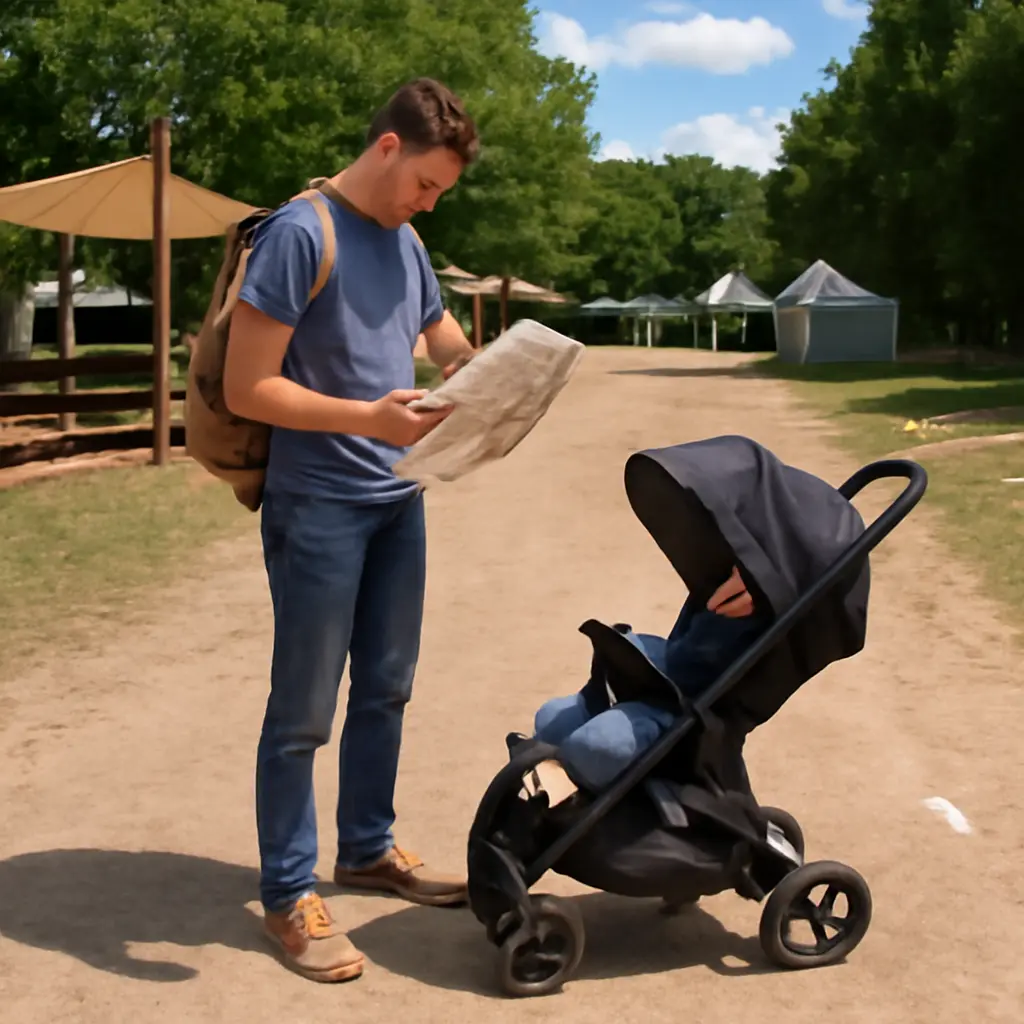
A step-free route is a continuous path that avoids stairs and other barriers, connecting entrances with essential services such as water, seating, medical help, and family-care facilities. It should be firm, stable, and wide enough for mobility devices and strollers, with obstructions and steep changes in level addressed in the event plan. Accessible viewing areas and companion seating help families attend performances together rather than being separated by barriers.
The U.S. Access Board’s accessibility standards provide technical requirements for elements such as routes, ramps, and turning space. Because temporary festival sites can change with weather and crowd movement, organizers should inspect routes before opening and throughout the day, then clearly mark any temporary detours.
Maps, signs, and information points
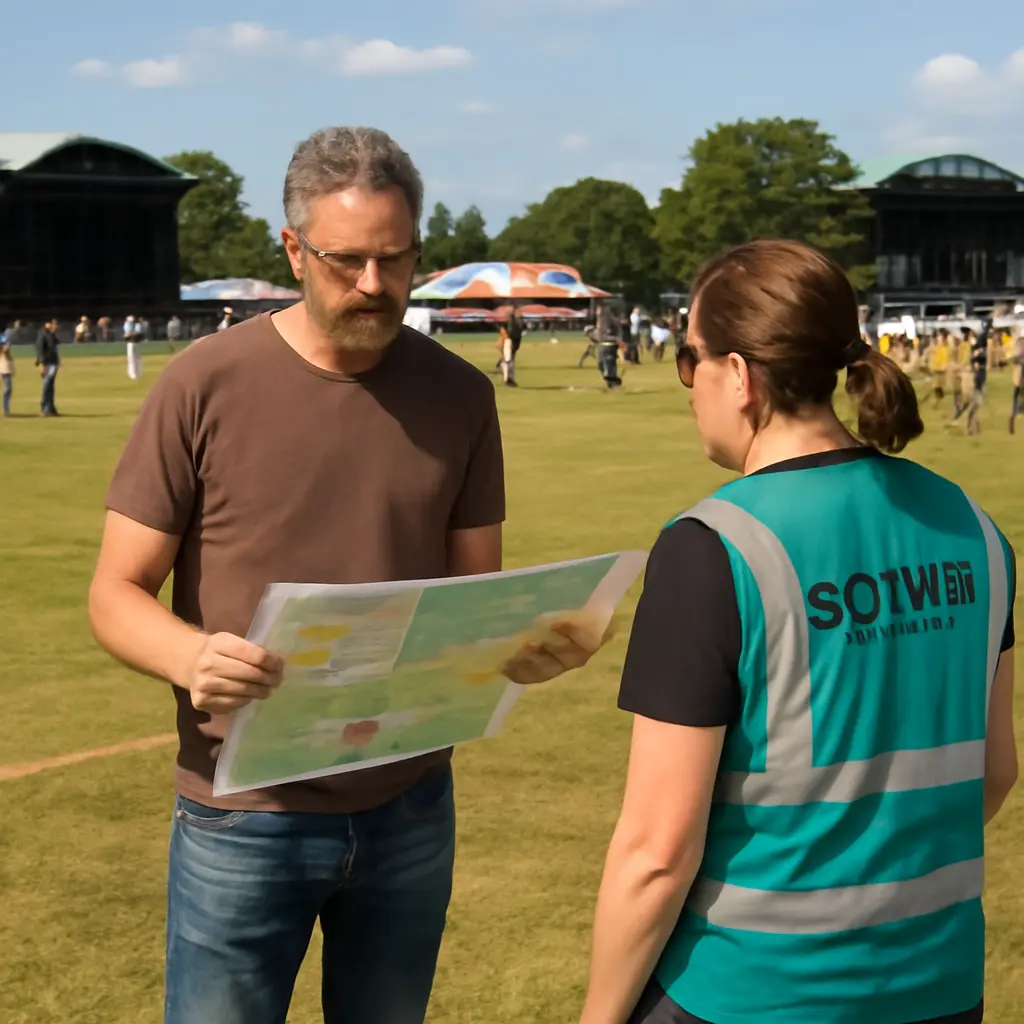
Wayfinding is the system of signs, maps, staff, and digital information that helps attendees locate places and make decisions. A family-oriented map should show water, shade, quiet space, baby-care areas, first aid, accessible routes, lost-child procedures, and exits—not only stages and food stalls. Use familiar symbols, readable text, and consistent colors, and provide the same information through more than one channel so visitors are not dependent on a phone signal.
A staffed information point can answer questions that maps cannot, such as where to find a missing-child reunification area or which route is currently clear. Staff should receive a short briefing on accessibility, family facilities, and emergency procedures before gates open.
Child safety and health services: the protection attribute
Family safety facilities are services and procedures that help prevent injury, respond to illness, and reunite separated children with caregivers. They include first-aid posts, lost-child protocols, clear exits, and trained staff. The Event Safety Alliance’s event-safety approach underscores that these measures should be planned in advance, assigned to responsible people, and communicated consistently.
First aid and heat-response support
A first-aid point is a staffed location where attendees can seek initial care and be referred for emergency treatment when needed. For family events, it should be easy to find, clearly signed, and connected to an emergency communications plan. The National Weather Service identifies confusion, fainting, seizures, and very high body temperature among possible heat-stroke warning signs; anyone showing severe symptoms needs emergency assistance.
Organizers should plan cooling options, drinking-water access, ambulance access, and clear radio or phone procedures. Public messages should tell attendees how to contact event staff and where to go, without suggesting that a cooling tent replaces professional medical care.
Lost-child reunification
A reunification point is a controlled location where staff help reconnect a separated child with a verified caregiver. The process should be private enough to protect children while remaining visible and easy to locate. Staff need clear procedures for receiving a child, contacting the appropriate team, documenting the handoff, and verifying the adult’s relationship or authorization.
Before the event, families can agree on a meeting point and explain how children should identify trusted staff. Organizers should publish the official procedure and train workers not to release a child based only on an unverified claim. If a child is missing, attendees should be able to alert staff immediately without searching the entire site alone.
Food, cleanup, and rest: the everyday-comfort attribute
Everyday-comfort facilities support the practical needs that arise over several hours: eating, cleaning up, resting, and disposing of waste. They help families stay longer without turning minor inconveniences into health or safety problems. The U.S. Food and Drug Administration’s food-safety guidance emphasizes cleanliness and safe handling, principles that festival vendors and organizers should reinforce through handwashing access and waste management.
Family-friendly food and handwashing
Family-friendly food access includes options that suit different ages, dietary needs, and budgets, along with clear ingredient and allergen information where available. Handwashing stations near food areas help attendees clean their hands before eating, while vendors should follow applicable food-safety rules. Families may also benefit from a designated place to sit while feeding young children, separate from busy queues and vehicle routes.
A practical festival map can mark drinking water, food vendors, handwashing points, and seating together. This reduces unnecessary walking and makes it easier for caregivers to plan around nap times, medication, and meal schedules.
Waste, cleanup, and weather contingencies
Waste facilities include rubbish and recycling bins, diaper-disposal options, and cleaning supplies or response teams for spills. They should be placed where families can reach them without blocking accessible paths or creating crowd bottlenecks. Regular collection prevents overflow and helps maintain a cleaner environment around eating and play areas.
Weather plans are part of comfort infrastructure too. Organizers should tell attendees what happens during heat, heavy rain, high winds, or lightning, including where to shelter and how event updates will be delivered. Clear procedures allow caregivers to make informed decisions before conditions become urgent.
How organizers can prioritize facilities
A strong family-facilities plan begins with the site, schedule, expected attendance, weather exposure, and the age range of visitors. Organizers should consult disability advocates, caregivers, medical staff, vendors, and local authorities while planning, then test the layout as if moving through it with a stroller, wheelchair, or tired child.
- Map essential services together: water, shade, first aid, accessible routes, family care, and reunification.
- Provide more than one route or location for high-demand services where the site allows it.
- Use clear signs and publish the same amenity information on maps, event pages, and staff briefings.
- Assign teams to inspect supplies, cleanliness, route access, and crowd flow during the event.
- Collect attendee feedback and incident reports afterward, then use them to improve the next event.
A simple site diagram can show the relationship between amenities: for example, shaded rest areas near water, family-care facilities on step-free routes, and first aid close to a clear vehicle access point. The diagram should also identify quiet areas and emergency exits without implying that any one facility can replace another.
Conclusion
Festival facilities parents need extend well beyond toilets. Water, shade, seating, baby-care rooms, accessible routes, wayfinding, first aid, reunification procedures, food access, and cleanup services all contribute to a safer and more welcoming event. Public-health and accessibility guidance supports treating these features as planned infrastructure, especially because children and people with disabilities can face additional barriers during heat, crowds, and long walks.
Organizers should map these facilities, staff them, maintain them, and explain them before attendees arrive. Parents can also check event maps and weather plans in advance and share feedback afterward. A festival designed around real family needs is more usable for everyone.
Sources: Centers for Disease Control and Prevention, Heat and Health, https://www.cdc.gov/heat-health/about/index.html; National Weather Service, Heat Safety, https://www.weather.gov/safety/heat; Event Safety Alliance, The Event Safety Guide, https://eventsafetyalliance.org/; ADA National Network, Effective Communication, https://adata.org/factsheet/communication; U.S. Access Board, ADA Accessibility Standards, https://www.access-board.gov/ada/; U.S. Access Board, Chapter 6: Plumbing Elements and Facilities, https://www.access-board.gov/ada/guides/chapter-6-plumbing-elements-and-facilities/; U.S. Department of Labor, Pumping Breast Milk at Work, https://www.dol.gov/agencies/whd/pump-at-work; Centers for Disease Control and Prevention, Child Care and K-12 Schools, https://www.cdc.gov/hygiene/about/clean-hands.html; U.S. Food and Drug Administration, Food Safety at Home, https://www.fda.gov/consumers/consumer-updates/food-safety-home.