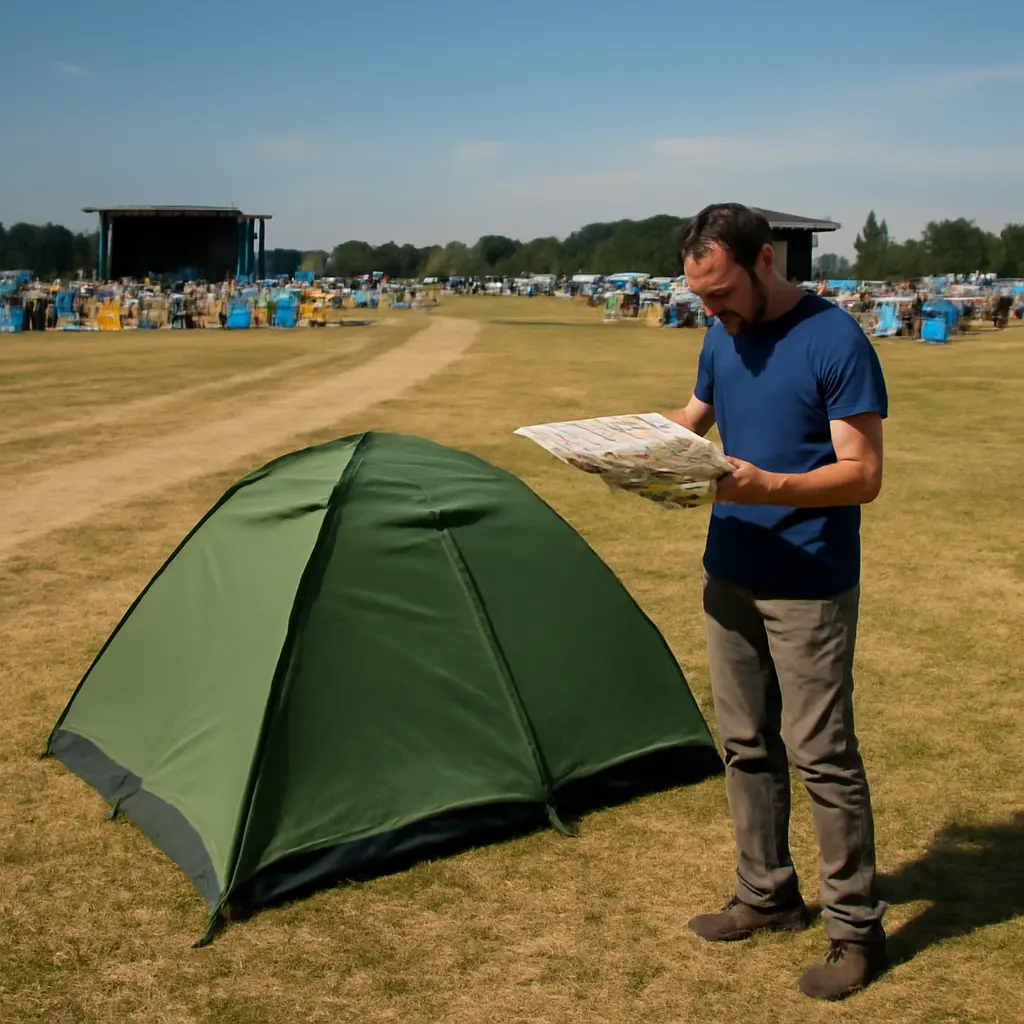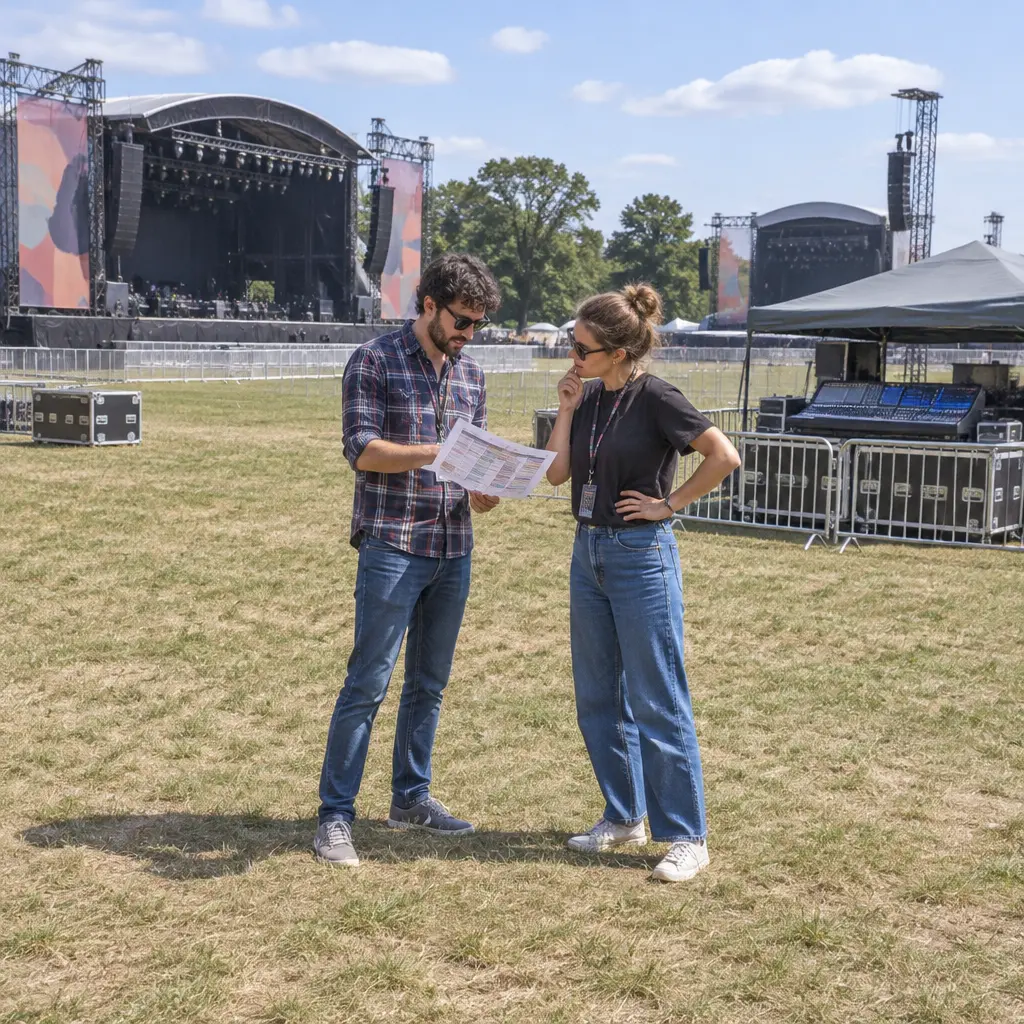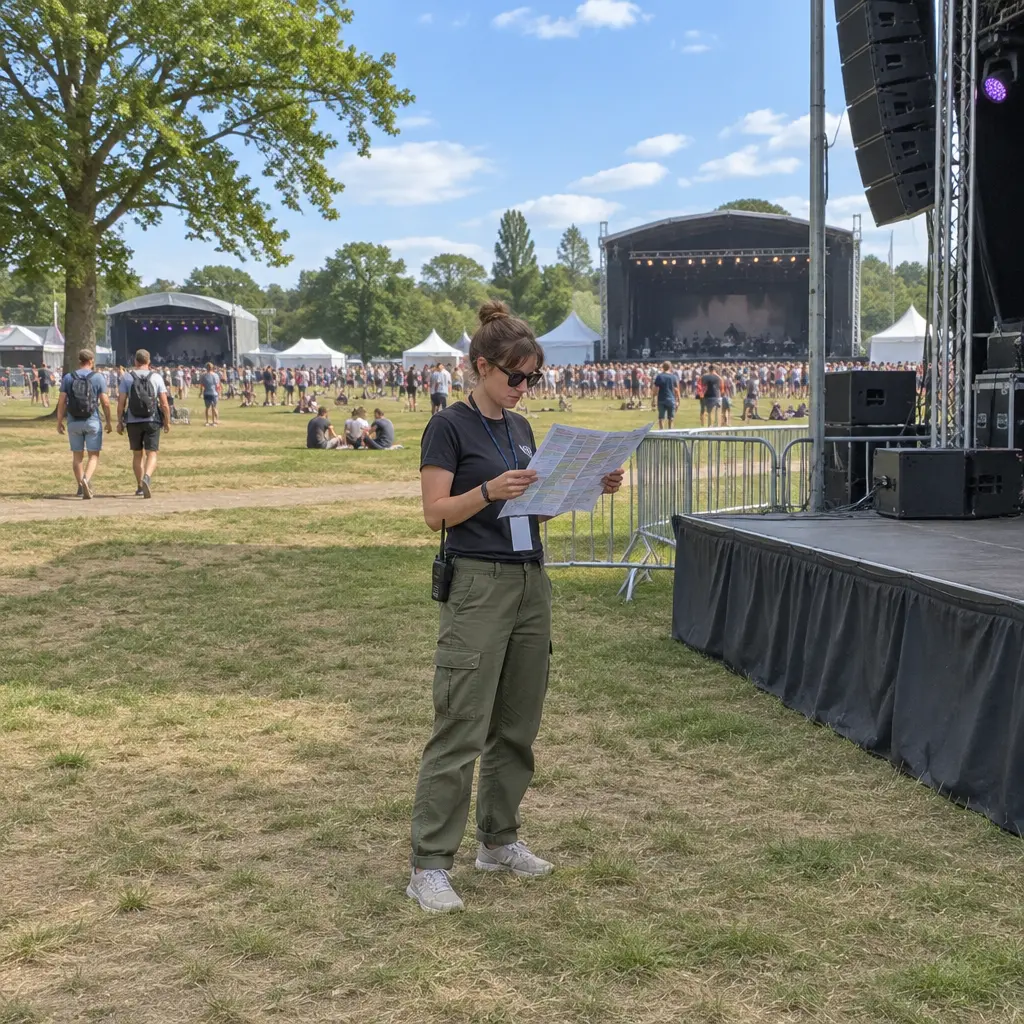
Music festival lineup curation is the process of selecting and ordering performers to create an appealing, financially viable, and distinctive event. The strongest lineups balance established headliners, whose recognition can help sell tickets, with emerging artists who introduce audiences to new sounds and build a festival’s future identity. That balance matters in a large live-music economy: the National Independent Venue Association reported in its 2024 survey that independent venues and festivals contributed $153.1 billion in annual economic output in the United States, while the National Endowment for the Arts has documented persistent public interest in live music. Effective curation therefore treats headliner draw, discovery, audience fit, scheduling, and risk as connected decisions—not competing goals.
Festival lineup curation and the balance between draw and discovery
A festival lineup is both an artistic program and a portfolio of attractions. Headliners can anchor marketing and ticket demand, while emerging performers differentiate the event, encourage exploration, and develop relationships with audiences. There is no universal ratio that guarantees success: the right mix depends on the festival’s size, genre, ticket model, location, costs, and intended audience. Organizers can make the trade-offs more transparent by evaluating each booking against a shared set of artistic, commercial, and operational criteria.
What lineup curation means
Lineup curation is the deliberate selection, sequencing, and presentation of performers in service of a festival’s identity and objectives. It includes more than choosing names. Curators consider genre and cultural representation, audience overlap, performance quality, availability, fees, stage capacity, timing, and the experience attendees have moving between sets. A lineup communicates what the festival stands for before its gates open.
The Association of Independent Festivals in the United Kingdom has described independent festivals as a diverse sector spanning different sizes, locations, and programming approaches. That variety is a useful reminder: a lineup strategy should fit the specific event rather than copy a formula from a major commercial festival. An urban genre festival, a rural camping event, and a local community festival will make different choices even when they share some artists.
Why headliners and emerging artists serve different functions
A headliner is generally a prominently billed performer expected to attract substantial attention and often close a main stage. Headliners can provide a recognizable reason to consider purchasing a ticket, support sponsorship and media campaigns, and give an event a clear focal point. Their fees and production requirements, however, can concentrate financial risk and consume resources that might otherwise support a broader roster.
An emerging artist is a performer with a growing profile who may not yet command the reach or fee of a major headliner. Emerging acts can offer discovery, local relevance, genre depth, and the possibility of future growth. “Emerging” should not be treated as a judgment of artistic quality: it describes market position, which can differ substantially between scenes and regions. The most effective program gives these artists meaningful stages and times rather than treating them as decorative additions.
Festival booking strategy balances commercial appeal with artistic value
A booking strategy translates a festival’s mission into choices about artist mix, budget, and presentation. It can be understood as a portfolio: a small number of high-recognition bookings may reduce uncertainty about audience interest, while a wider group of developing acts can increase distinctiveness and provide multiple discovery points. This is not a literal investment guarantee. Artist popularity is difficult to predict, and booking outcomes depend on timing, market conditions, competing events, and execution.
Headliner draw and ticket demand
Headliner draw refers to an artist’s ability to attract attention, influence purchase decisions, and support an event’s public profile. Promoters can assess it using observable indicators such as historical ticket sales in the region, streaming and social-media reach, search interest, venue sell-through, and the artist’s performance history at comparable events. None is a complete measure: online popularity does not automatically translate into local ticket purchases.
The UK Competition and Markets Authority’s work on ticketing and live events highlights the importance of clear pricing and consumer information in the ticket-buying process. For lineup planners, that means a compelling artist announcement is only one part of conversion. Total ticket cost, travel, accommodation, event reputation, and the perceived value of the full program can also affect demand. A festival should test whether its headliner is attracting new buyers or mainly appealing to people who already planned to attend.
Emerging-artist discovery and festival identity
Discovery programming gives attendees credible opportunities to encounter performers they do not already know. It can include early-stage acts, regional artists, new genre crossovers, and performers who are established in one community but unfamiliar to the festival’s broader audience. Discovery becomes more effective when it is supported by clear stage information, editorial recommendations, well-designed schedules, and performances placed where audiences can realistically attend.
A festival’s identity strengthens when discovery choices connect to a recognizable point of view. For example, a jazz festival might pair established international performers with local ensembles and contemporary artists who expand the definition of jazz. A multi-genre event might build a pathway from a rising act on a smaller stage to a related headliner later in the day. In both cases, the smaller booking contributes to the program’s story rather than functioning as filler.
Budget allocation and portfolio risk
A lineup budget includes artist fees, travel, accommodation, production, hospitality, insurance, and contingency costs. A high-profile booking may absorb a large share of the available budget, so planners should compare its full cost with plausible revenue and the value of alternative bookings. They should also account for contractual terms, cancellation exposure, and production needs before announcing an act.
The National Independent Venue Association’s 2024 survey described substantial economic pressures across independent live music, including rising operating costs and thin financial margins. Although its figures cover a broad sector rather than offering a universal festival budget benchmark, they underline why overreliance on one expensive booking can be risky. A diversified program can spread artistic and commercial exposure, but it does not remove risk: several lower-cost bookings can still underperform collectively.
Audience research and scheduling make the lineup work on site
A balanced roster creates value only if the intended audience can discover and experience it. Audience research helps organizers distinguish between stated preferences and actual behavior, while schedule design determines whether appealing acts are accessible or forced into avoidable conflicts. Together, these decisions turn a list of performers into a usable festival experience.
Audience segmentation and local context
Audience segmentation groups attendees by characteristics relevant to programming, such as genre interests, age, geography, attendance history, accessibility needs, and willingness to travel. Organizers can combine ticketing data and surveys with listening trends, community consultation, and feedback from local promoters and venues. The goal is not to reduce people to demographic categories; it is to understand varied reasons for attending and identify groups the festival may be overlooking.
Local context matters because an artist’s national profile may not reflect regional demand. A developing act with a strong local following can be more relevant to a community festival than a better-known performer with little connection to the area. Planners should examine previous attendance, comparable events, transport patterns, and the local music ecosystem before deciding which audiences a proposed lineup is likely to serve.
Stage placement, set times, and audience flow
Scheduling is the practice of assigning artists to stages and performance times in a way that supports audience access, operational needs, and the intended energy of the event. Simultaneous sets by artists with strongly overlapping audiences can frustrate attendees and divide demand. Conversely, placing complementary acts at different times can encourage exploration across stages and help an emerging artist reach listeners between major performances.
Organizers should also consider stage capacity, sound bleed, changeover time, artist travel, accessibility, and crowd movement. A smaller stage can be an effective discovery space when it is easy to find and has appropriate production. It can become a bottleneck if its capacity is too low or if a popular act is scheduled without a suitable crowd-management plan. A schedule grid or stage-flow map can help identify conflicts before publication.
Measurement and real-world programming lessons
Evaluation should test whether the lineup achieved both its commercial and cultural aims. Ticket revenue alone cannot show whether attendees discovered new artists, whether local performers gained meaningful exposure, or whether the program reached audiences the festival intended to serve. A defined measurement plan also makes it easier to improve future editions rather than relying on anecdotes.
Metrics for a balanced lineup
Useful measures include ticket sales by announcement phase, conversion after artist reveals, attendance by stage and set time, schedule-app saves, survey responses about artist discovery, repeat attendance, and post-event streaming or social engagement where data is available. Organizers can also track the share of bookings from the local region, first-time festival performers, and artists at different career stages. These indicators should be interpreted together: a high stage count, for instance, does not prove that a performer reached the right audience.
A practical dashboard can compare targets with results across four areas: commercial performance, audience experience, artistic diversity, and operational delivery. Results should be disaggregated when appropriate, while respecting privacy and data-protection requirements. Small samples, survey response bias, and changes in weather or competing events can all affect comparisons from one year to the next.
Examples of programming approaches
Glastonbury Festival illustrates how a large event can place established global performers alongside emerging and less widely known acts across multiple stages. Its scale makes it an exceptional case, not a template for every organizer, but its breadth shows how different stages can serve distinct audiences and programming roles. Smaller festivals can apply the principle at a more manageable scale by creating a clearly promoted discovery stage or reserving a defined portion of the bill for regional talent.
The South by Southwest Music Festival offers another model: a multi-venue program where artists at different career stages perform across an urban setting. Its format emphasizes exploration and industry discovery rather than a single main-stage hierarchy. The comparison shows that balance is shaped by event design: a destination festival may build around a few major nightly performances, while a citywide showcase can distribute attention among many venues and artists.
These examples also reveal a limitation: visibility does not automatically equal opportunity. Emerging performers need fair deal terms, adequate sound and lighting, accessible stages, and promotion that helps audiences find them. Festivals should assess not only how many developing acts they book but also the conditions under which those artists perform.
Conclusion: curate for demand, discovery, and long-term value
Festival lineup curation works best when headliner draw and emerging-artist discovery are treated as complementary parts of a coherent program. Booking strategy aligns artistic choices with costs and risk; audience research provides local context; scheduling makes the lineup accessible; and measurement shows what worked. Economic data from the independent live-music sector reinforces the need for realistic budgeting, while examples from large festivals and urban showcases demonstrate that there is no single model for balancing a bill.
Organizers can begin by defining the festival’s purpose, setting measurable goals for both ticket demand and discovery, and reviewing the full cost and audience fit of each booking. They should then publish a schedule that supports exploration and evaluate outcomes with artists and attendees after the event. For further research, consult the National Independent Venue Association’s industry reporting, the Association of Independent Festivals’ resources, and official festival program archives.
Sources: National Independent Venue Association, 2024 NIVA State of Live Report, https://www.nivassoc.org/stateoflive; Association of Independent Festivals, About AIF, https://aiforg.com/about-aif/; UK Competition and Markets Authority, Ticketing and live events market study, https://www.gov.uk/cma-cases/ticketing-and-live-events-market-study; Glastonbury Festival, Line-up archive, https://www.glastonburyfestivals.co.uk/line-up/; South by Southwest, Music Festival, https://www.sxsw.com/festivals/music/; National Endowment for the Arts, Arts Participation and Arts Audience Research, https://www.arts.gov/impact/research/arts-data-profile-series.