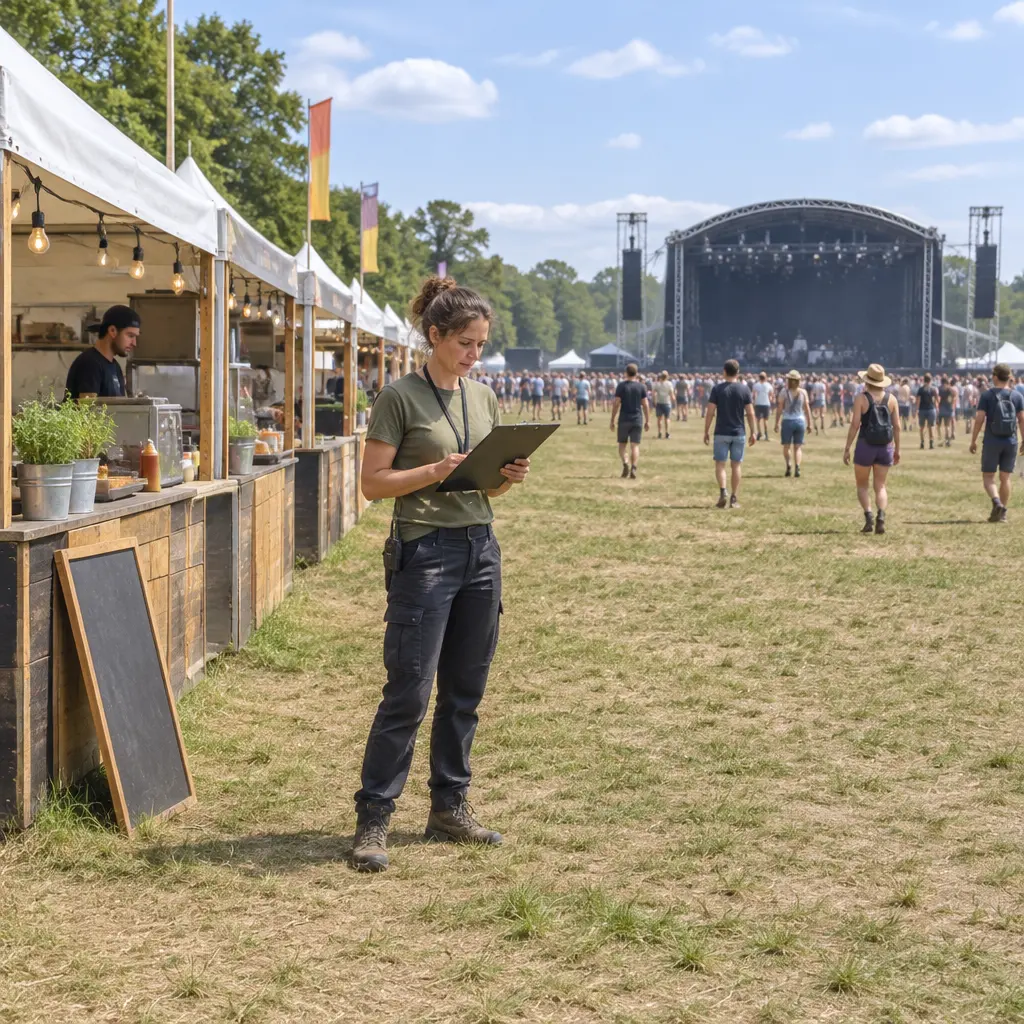
Music festivals make money by combining ticket sales with sponsorships, food and beverage concessions, merchandise, vendor fees, and sometimes broadcast or licensing income. The mix matters: ticket revenue can be substantial, but it must cover artist guarantees, production, security, staffing, insurance, and venue costs. Industry research underscores the scale of the opportunity: a 2024 PwC outlook projected that global live-music revenue would reach about US$34 billion in 2028, while U.S. event organizers operate in a market where sponsorship, hospitality, and on-site spending can materially affect profitability. Understanding the business means looking at the festival’s revenue streams, its cost structure, and how organizers manage risk.
Festivals generate revenue through diversified income streams
A music festival’s revenue model is the set of ways its organizer earns income from an event, its audience, and associated commercial rights. The model typically combines admission revenue with sales and partnerships tied to the event experience. In practice, festivals differ: a small, ticketed independent event may depend heavily on admissions, while a large destination festival can also earn from brand sponsorship, premium accommodation, food and drink, and media rights.
The live-music business is economically significant, but industry-wide totals should not be mistaken for the profit of an individual festival. PwC’s Global Entertainment & Media Outlook tracks live-music revenue across markets and formats; a single event’s results depend on attendance, ticket pricing, local purchasing power, artist costs, weather, and contractual terms. The following revenue categories show where festival income usually comes from and how each connects to the others.
Ticket sales and tiered admission
Ticket sales are admission payments made by attendees and are often the festival’s most visible revenue source. Organizers commonly sell early-bird, general-admission, VIP, and single-day tickets at different prices. Tiered pricing rewards early commitment, gives buyers choices, and allows the organizer to raise prices as inventory becomes scarcer. Some events also charge booking or facility fees, though those charges may be collected by ticketing partners and are subject to contracts and local rules.
Gross ticket revenue is not the same as cash available to spend. Taxes, refunds, payment-processing charges, ticketing fees, and promoter or venue shares can reduce the amount retained. Capacity also places a hard limit on admissions income: an event cannot sell more tickets than its safe permitted capacity, and complimentary or artist-allotted tickets may occupy inventory without generating revenue.
Sponsorships and brand partnerships
Sponsorship is payment or in-kind support from a company in exchange for association with the event and access to agreed marketing benefits. A sponsor might receive stage naming, signage, sampling space, digital promotion, hospitality tickets, or category exclusivity. In-kind contributions—such as equipment, connectivity, or beverages—can reduce an organizer’s costs, although they are not necessarily cash revenue.
The value of a sponsorship depends on more than attendance. Brands may consider audience demographics, media reach, opportunities for product trials, social engagement, and whether the event fits their identity. Sponsorship packages therefore often combine on-site visibility with digital content and year-round promotion. Organizers need to define deliverables clearly and measure results, because a sponsor’s renewal is more likely when the event can document impressions, interactions, sampling, or other agreed outcomes.
Food, beverages, and merchandise
Concessions and merchandise earn money from attendee spending inside the festival. Organizers may operate these activities directly, lease space to vendors, or use revenue-sharing agreements. Direct operation can offer more control over pricing and margins but requires inventory, staff, payment systems, and food-safety management. Vendor leases or commissions shift some operating work to third parties, while giving the festival a contracted fee or percentage of sales.
The headline sales total is not the organizer’s profit. Food costs, labor, utilities, payment fees, waste, and vendor commissions affect the amount retained. Merchandise can also include artist-specific products, with the rights and revenue split governed by agreements between the artist, their merchandise operator, and the festival. Clear settlement terms matter because different sellers may control different parts of the transaction.
Camping, parking, and premium experiences
Ancillary revenue is income from services beyond basic admission. Common examples include camping, parking, shuttle transport, lockers, premium viewing areas, upgraded restrooms, and hospitality packages. These add-ons can increase spending per attendee and improve convenience, but they require capacity planning, staffing, safety measures, and infrastructure. A camping pass, for example, can only be sold if the site has sufficient permitted space and facilities.
Premium offerings are most effective when they provide a clear benefit without making the standard experience feel inadequate. Organizers must also account for accessibility, crowd movement, and service quality. If a premium product promises dedicated entrances or viewing areas, the festival needs enough staff and space to deliver those benefits reliably.
Broadcasting, streaming, and licensing
Media and licensing revenue comes from selling or granting rights to record, broadcast, stream, or reuse festival content. A festival may license performances to a broadcaster, publish sponsored clips, or distribute an official livestream. These arrangements can extend a festival’s reach beyond the physical site, but they involve rights clearances for performers, compositions, recordings, and other protected material.
Media income is not automatic: production costs, platform agreements, audience demand, and rights restrictions determine whether a broadcast is commercially worthwhile. Some festivals use streaming chiefly as marketing rather than as a direct profit center. This illustrates a broader point: a revenue stream can create value by supporting ticket sales or sponsor exposure even when it does not produce a large standalone payment.
Festival profitability depends on controlling costs and risk
Revenue becomes profit only after the organizer pays the costs of staging the event. The U.S. Small Business Administration’s guidance on business financial planning emphasizes tracking revenue, expenses, and cash flow; the same discipline applies to festivals, where large commitments often fall due before final ticket sales are known. Budgets should distinguish fixed costs, variable costs, and contingency reserves.
Artist fees and production spending
Artist costs include performance fees, travel, accommodation, hospitality, and related production requirements. Contracts may specify deposits, cancellation terms, technical riders, and guarantees. Headliners can help sell tickets and attract sponsors, but their fees can also make a festival financially vulnerable if sales underperform. Organizers balance booking appeal against the cost of a full lineup, stage schedules, and production needs.
Production expenses cover stages, sound, lighting, power, temporary structures, fencing, toilets, and site services. These costs vary with the venue, event length, expected crowd, and technical ambition. A highly produced event may create a stronger audience experience and sponsor inventory, but it must generate enough additional income to justify the added expense.
Site operations, safety, and insurance
Operational costs include security, medical services, crowd management, cleaning, waste disposal, transport coordination, permits, and staff. They are not optional extras: they help protect attendees and workers, satisfy legal requirements, and preserve the event’s ability to operate. Requirements differ by jurisdiction and site, so budgets should be based on the applicable permits and risk assessments rather than a generic per-attendee estimate.
Insurance can transfer some financial exposure, but it does not eliminate every loss. Organizers should review coverage, exclusions, deductibles, and cancellation conditions with qualified advisers. Severe weather, transport disruption, artist cancellation, or public-safety incidents can affect attendance and trigger significant costs, making contingency planning central to financial management.
Break-even analysis and cash flow
Break-even analysis estimates the sales level at which total revenue equals total costs. A simplified calculation divides fixed costs by the contribution earned per ticket after variable costs. For example, if fixed costs are $1 million and each additional ticket contributes $100 after per-attendee costs, the event would need 10,000 such ticket contributions to cover those fixed costs, before considering other income or expenses. This is an illustrative calculation, not a universal festival benchmark.
Cash flow is equally important because deposits for artists, venues, and production may be due months before the event. Ticketing cash may arrive on a different schedule, and sponsor payments can be tied to contract milestones. A festival can appear profitable on a final income statement yet face a liquidity crisis if cash arrives after major bills fall due. Staged budgets, conservative sales forecasts, and reserve funds help manage this timing risk.
Festival business models vary by scale and format
The revenue mix changes with the festival’s size, location, duration, and audience. A city-center event may depend on ticketing and local sponsors, while a remote multi-day festival may earn more from camping and transport. These are different business models rather than one standard formula, and each creates distinct financial and operational trade-offs.
Independent and community festivals
Independent festivals are often smaller events organized by local promoters, arts groups, or community organizations. They may rely on modest ticket prices, public grants, local business sponsorship, vendor fees, and volunteer support. Their strengths can include strong local identity and lower artist or site costs, although limited capacity and smaller sponsorship markets constrain revenue.
Public funding and charitable support should be treated separately from earned income because eligibility, reporting, and permitted uses can differ. Community events also create value through tourism and local spending, but those broader economic effects do not automatically become revenue for the festival organizer.
Large destination festivals
Destination festivals attract audiences who travel and stay for multiple days. They can sell multi-day admission, camping, parking, hospitality, and transport packages, while offering sponsors a large and concentrated audience. Their scale can support broader commercial partnerships, but it also increases exposure to weather, logistics, infrastructure, and high fixed costs.
Coachella, produced by Goldenvoice, illustrates the destination model through a large-scale, multiweekend event with ticketing, brand activations, food, merchandise, and media attention. Its public profile makes it a useful example of revenue diversification, but its economics should not be treated as representative of smaller festivals: its brand recognition, capacity, booking power, and commercial reach are unusual.
Single-day and city festivals
Single-day festivals and urban events may avoid camping infrastructure and long-duration site costs. They can benefit from public transport, nearby hotels, and city-based sponsors, while competing with other cultural events and venue activity. Their shorter schedule can make admissions and food-and-beverage sales especially important, and their profitability may depend on efficient setup and teardown.
Successful festivals connect audience value with commercial value
A festival earns sustainably when its commercial offer supports an experience people want to attend. Ticket prices must reflect the audience’s willingness to pay and the event’s costs; sponsors need meaningful access without overwhelming the program; vendors need workable terms; and premium services must deliver what they promise. Poor alignment can damage reputation, reduce repeat attendance, and weaken future sponsorship.
Organizers can evaluate performance using measures such as ticket sell-through, average revenue per attendee, sponsor renewal, concession sales, operating cost per attendee, and cash reserves. These metrics are most useful when compared across editions and interpreted alongside capacity, weather, lineup, and pricing changes. No single metric proves success: high attendance, for example, does not guarantee profit if costs or revenue shares are too high.
- Build a budget that separates guaranteed income from projected or conditional income.
- Model multiple attendance and weather scenarios before committing to major costs.
- Negotiate clear contracts covering payment timing, cancellations, revenue shares, and deliverables.
- Track attendee spending and satisfaction while protecting safety, accessibility, and the core music experience.
- Use post-event settlement reports to identify which revenue streams and costs deserve changes next year.
Conclusion: Festivals make money through a balanced business model
Music festivals make money through ticket sales, sponsorships, concessions, merchandise, camping and other add-ons, and sometimes media rights. Their profitability depends on controlling artist, production, site, staffing, safety, and insurance costs while managing cash flow and risks. Independent, destination, and city festivals use different combinations of these tools, so revenue figures cannot be compared fairly without considering scale and costs.
For organizers, the practical lesson is to diversify income without losing sight of audience value, and to budget conservatively before making large commitments. For attendees, understanding the business explains why ticket prices, brand partnerships, and on-site sales are part of the festival economy. Further reading in live-entertainment market reports, small-business financial planning, and local event-permitting guidance can help clarify how a particular festival is financed.
Sources: PwC, Global Entertainment & Media Outlook 2024–2028, https://www.pwc.com/gx/en/industries/tmt/media/outlook.html; U.S. Small Business Administration, Manage your finances, https://www.sba.gov/business-guide/manage-your-business/manage-your-finances; Coachella, Official Festival Website, https://www.coachella.com/; Goldenvoice, Company Information, https://www.goldenvoice.com/