Weather can turn a carefully planned festival into an emergency in hours. For outdoor festivals, bad weather can destroy months of work in four connected ways: it can make the site unsafe, damage stages and equipment, disrupt transport and attendance, and trigger costly cancellations or refunds. The National Weather Service identifies lightning, flooding, high winds, and extreme heat as hazards that event organizers should plan for; the consequences can extend from a shortened program to serious injuries and major financial losses.
How Weather Threats Disrupt Festival Operations
A festival weather disruption is an operational interruption caused by atmospheric conditions that threaten people, infrastructure, access, or the event’s ability to continue. The Federal Emergency Management Agency’s guidance for special events emphasizes identifying hazards, coordinating response roles, and preparing contingencies before an incident. For festival planners, the relevant hazards include thunderstorms and lightning, heavy rain and flooding, high winds, and extreme heat.
These hazards differ, but each can rapidly affect several parts of an event at once. A storm may require an evacuation, damage temporary structures, close roads, and leave vendors unable to trade. The following four pathways explain how that disruption unfolds.
1. Lightning and severe storms force evacuations
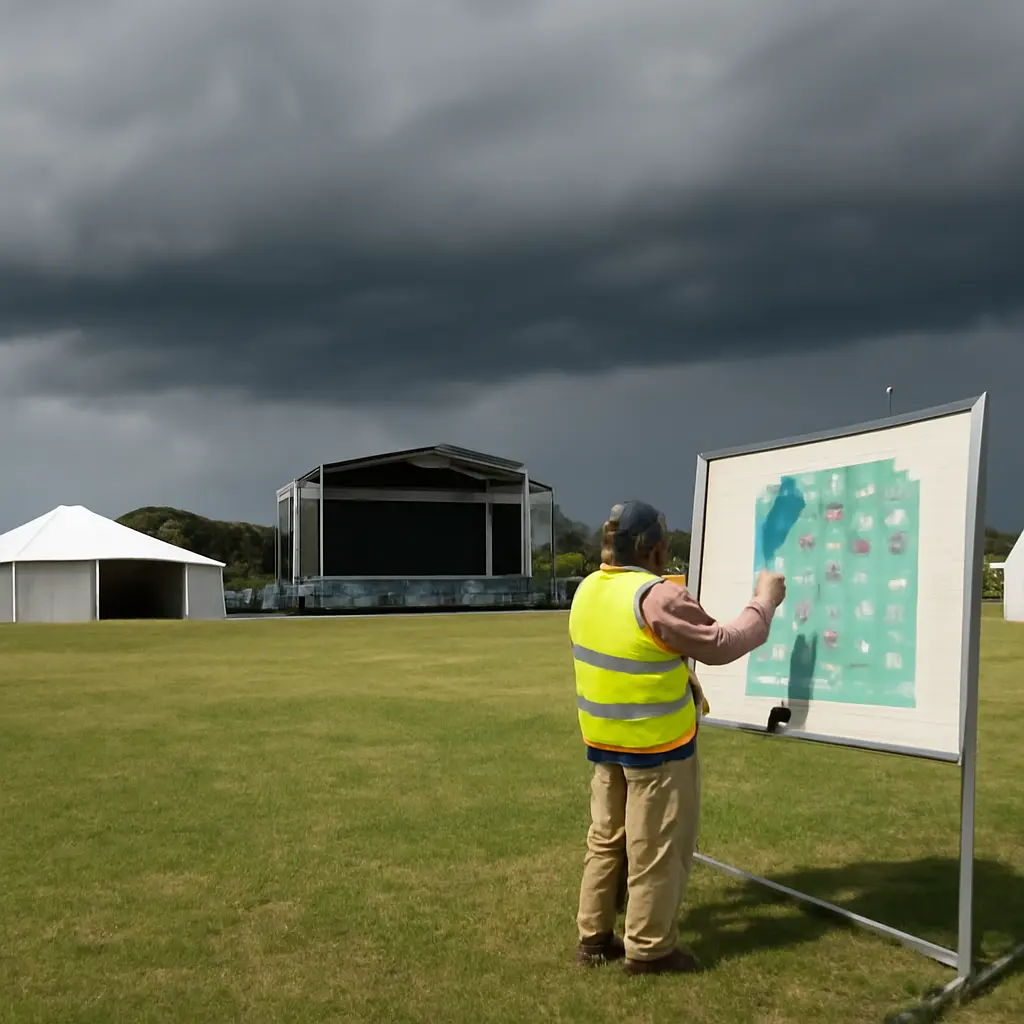
Lightning creates an immediate life-safety risk for audiences, performers, staff, and contractors in exposed outdoor areas. The National Weather Service advises moving people to a substantial building or an enclosed, hard-topped vehicle when thunder is heard, because lightning can strike outside the heaviest rainfall. A festival cannot safely treat a storm as a minor interruption simply because rain has not yet reached the grounds.
A credible lightning response can require stopping performances, pausing entry, directing crowds to shelter, and keeping people there until conditions improve. Those steps take time and depend on clear announcements, trained stewards, and adequate shelter capacity. If the site has no suitable shelter or the storm is prolonged, organizers may have to cancel the day’s program. The practical loss is not only performance time: schedules, artist commitments, security staffing, food service, and audience confidence can all be affected.
2. Heavy rain and flooding make the site unusable
Heavy rain can turn fields into unstable ground, flood low-lying areas, and overwhelm temporary drainage. Standing water around electrical distribution, cables, generators, or stage equipment raises additional safety concerns. Floodwater can also conceal holes and debris, while saturated ground may make vehicle access and emergency routes difficult.
The U.S. Geological Survey explains that flooding can occur when water exceeds the capacity of normal channels and drainage systems; local effects depend on rainfall, terrain, soil, and land use. For a festival, that means a site inspection before opening is not enough if conditions change. Organizers may need to close sections, relocate services, restrict vehicle movement, or suspend the entire event. Mud and water can also damage flooring, furnishings, stock, and equipment, increasing cleanup and replacement costs even after the weather passes.
3. High winds threaten stages, tents, and temporary structures
High winds can place dangerous loads on stages, lighting towers, screens, marquees, fencing, signage, and other temporary structures. A structure that appears secure in calm conditions may become hazardous when gusts rise, particularly if it has large fabric surfaces that catch the wind. Wind can also send loose objects airborne and make it unsafe for crews to work at height.
The Health and Safety Executive in Great Britain advises event organizers to assess weather effects on temporary demountable structures and to establish procedures for monitoring conditions and taking action. Such measures commonly include checking manufacturer limits, securing equipment, stopping stage work, and lowering or removing vulnerable components when required. A wind-related shutdown can therefore begin before a structure visibly fails: organizers may have to pause performances or evacuate areas as a precaution. If inspection reveals damage, reopening may be delayed until a competent person confirms the site is safe.
4. Extreme heat and bad-weather logistics drain attendance and budgets
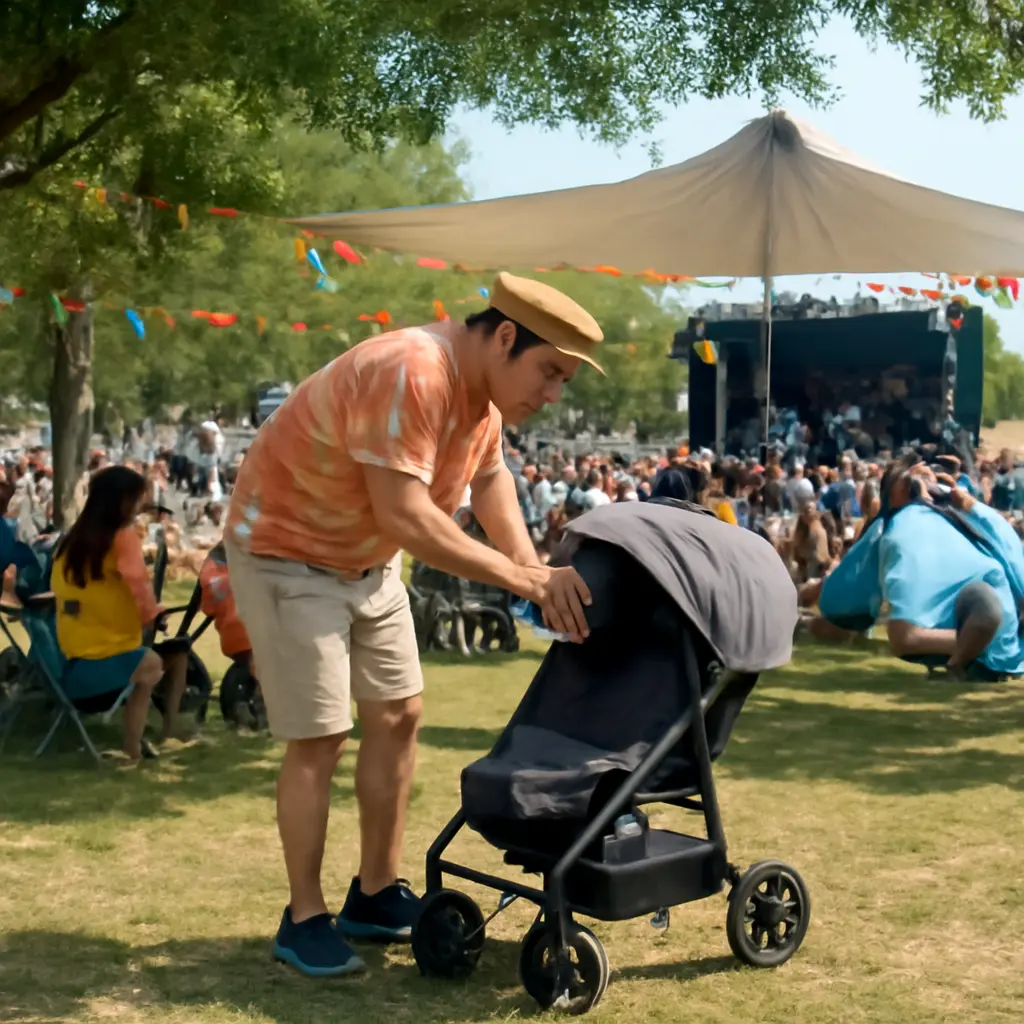
Extreme heat can threaten audience and worker health while also making the festival harder to operate. The Centers for Disease Control and Prevention notes that heat-related illness ranges from heat cramps and heat exhaustion to heat stroke, a medical emergency. Long queues, direct sun, strenuous work, and limited access to water can increase exposure. Organizers may need to add shade and water stations, adjust performance times, increase medical staffing, or suspend activities during the hottest periods.
Weather can also disrupt the systems that bring people and supplies to the site. Flooded roads, transit interruptions, poor visibility, and unsafe parking conditions can delay artists, vendors, staff, and emergency services. When attendance drops or the schedule changes, revenue from tickets, concessions, and merchandise may fall while costs continue. The U.S. National Oceanic and Atmospheric Administration’s Storm Events Database records damaging weather incidents across the United States, illustrating that severe weather is a recurring operational reality rather than an exceptional planning concern. The precise financial impact varies by festival, contract, insurance policy, and cancellation terms.
How Festival Teams Can Reduce Weather Damage
Weather cannot be controlled, but the time needed to respond can be. FEMA’s event-planning approach supports advance hazard assessment, clear authority, communication, and coordination with local responders. Festival teams can translate those principles into practical preparation:
- Set measurable weather triggers for pausing performances, sheltering, evacuating, and reopening, using advice from qualified safety personnel and relevant authorities.
- Identify suitable shelters, evacuation routes, accessible assistance, and backup locations before tickets go on sale.
- Inspect temporary structures and establish who can order work stoppages or evacuations.
- Monitor official forecasts and warnings, and communicate decisions through multiple channels, including public-address systems, screens, apps, and staff briefings.
- Review contracts, insurance, refund policies, and vendor arrangements so responsibilities and financial consequences are understood in advance.
A useful visual for planning is a simple risk matrix comparing each hazard’s likelihood, potential severity, warning time, and response action. It helps teams see why one forecast may call for extra monitoring while another requires an immediate stop or evacuation.
Conclusion: Weather Planning Protects People and the Festival
Bad weather can undo months of festival planning by forcing lightning evacuations, making rain-soaked ground unsafe, threatening temporary structures with high winds, and creating heat-related health risks and logistical losses. These impacts can overlap, turning a single forecast into a safety, operations, and financial crisis. Organizers should build weather triggers, shelter and evacuation plans, structural checks, communication procedures, and contract contingencies into event planning from the start. For further preparation, consult local emergency-management and weather authorities, and rehearse the response with staff before the gates open.
Sources: National Weather Service, Lightning Safety, https://www.weather.gov/safety/lightning; Federal Emergency Management Agency, Special Events Contingency Planning: Job Aids Manual, https://www.fema.gov/sites/default/files/2020-07/fema_special-events-contingency-planning-job-aids-manual_0504.pdf; U.S. Geological Survey, Floods: Recurrence Intervals and 100-Year Floods, https://www.usgs.gov/special-topics/water-science-school/science/floods-recurrence-intervals-and-100-year-floods; Health and Safety Executive, Temporary Demountable Structures, https://www.hse.gov.uk/event-safety/temporary-demountable-structures.htm; Centers for Disease Control and Prevention, Heat-Related Illnesses, https://www.cdc.gov/heat-health/about/index.html; National Oceanic and Atmospheric Administration, Storm Events Database, https://www.ncdc.noaa.gov/stormevents/.