A venue’s volume strategy is the way it manages amplified sound across the room, the event, and the night. Three common mistakes can drain the energy instead of building it: setting the overall level too high, failing to balance sound across the space, and ignoring how volume changes over time. The World Health Organization recommends keeping average sound exposure below 100 dB LAeq over 15 minutes at venues and events, alongside monitoring and hearing-protection measures. That benchmark is about hearing safety, but it also highlights a practical truth: a lively atmosphere depends on controlled, intentional sound—not simply turning everything up.
Venue volume management and the three mistakes that kill the vibe
Volume management means controlling sound pressure level, coverage, and exposure so music or speech suits the event without overwhelming guests or staff. The National Institute for Occupational Safety and Health (NIOSH) recommends an occupational exposure limit of 85 dBA over eight hours, with allowable exposure time halved for each 3 dB increase. This is a workplace guideline, not a universal guest-safety threshold, but it illustrates why high levels matter: exposure accumulates, and workers may spend much longer in loud spaces than patrons.
For venues, the relevant measures include the level at different locations, how long people are exposed, and whether the sound is intelligible and comfortable. A nightclub, restaurant, wedding venue, and live-music room need different targets. The mistakes below are related but distinct: excessive level harms comfort and exposure, uneven coverage makes the room feel inconsistent, and poor dynamic control makes the experience tiring or unpredictable.
Mistake 1: Treating loudness as energy
Loudness is the perceived strength of sound; energy is the emotional response created by music, performance, and audience participation. Turning up the master level may initially make a room feel more intense, but it can also make conversation harder, cause guests to retreat from speakers, and reduce the contrast between quieter and more powerful moments.
The WHO’s Global Standard for Safe Listening Venues and Events sets a recommended maximum average of 100 dB LAeq over 15 minutes, with additional measures such as sound-level monitoring, accessible hearing protection, and quiet zones. This is a ceiling within a safety framework—not a recommended operating level for every venue. A restaurant or reception space may need much lower levels to support conversation, while a concert may use higher levels for limited periods and with appropriate safeguards.
Mistake 2: Setting one level for the whole venue
Sound coverage is the way audio reaches different parts of a room. A single volume setting does not guarantee a consistent experience: guests near a loudspeaker may find the music overpowering, while those farther away hear weak or unclear sound. Reflective surfaces, room shape, speaker placement, and audience density all affect what people hear.
The Acoustical Society of America explains that room acoustics and reverberation influence how sound is perceived and how clearly speech can be understood. In practical terms, a venue should check levels at multiple listener positions rather than relying only on the sound desk. Zone controls can help keep a dance floor energetic while preserving quieter areas for conversation, dining, or accessibility needs.
Mistake 3: Ignoring changes over the night
Dynamic control means adjusting sound to the event’s changing needs instead of holding the same level from doors open to closing time. A level that works during an empty-room soundcheck may feel too loud once guests arrive, or too subdued when a dance floor fills. DJs, performers, and operators should coordinate transitions and account for announcements, speeches, and quieter moments.
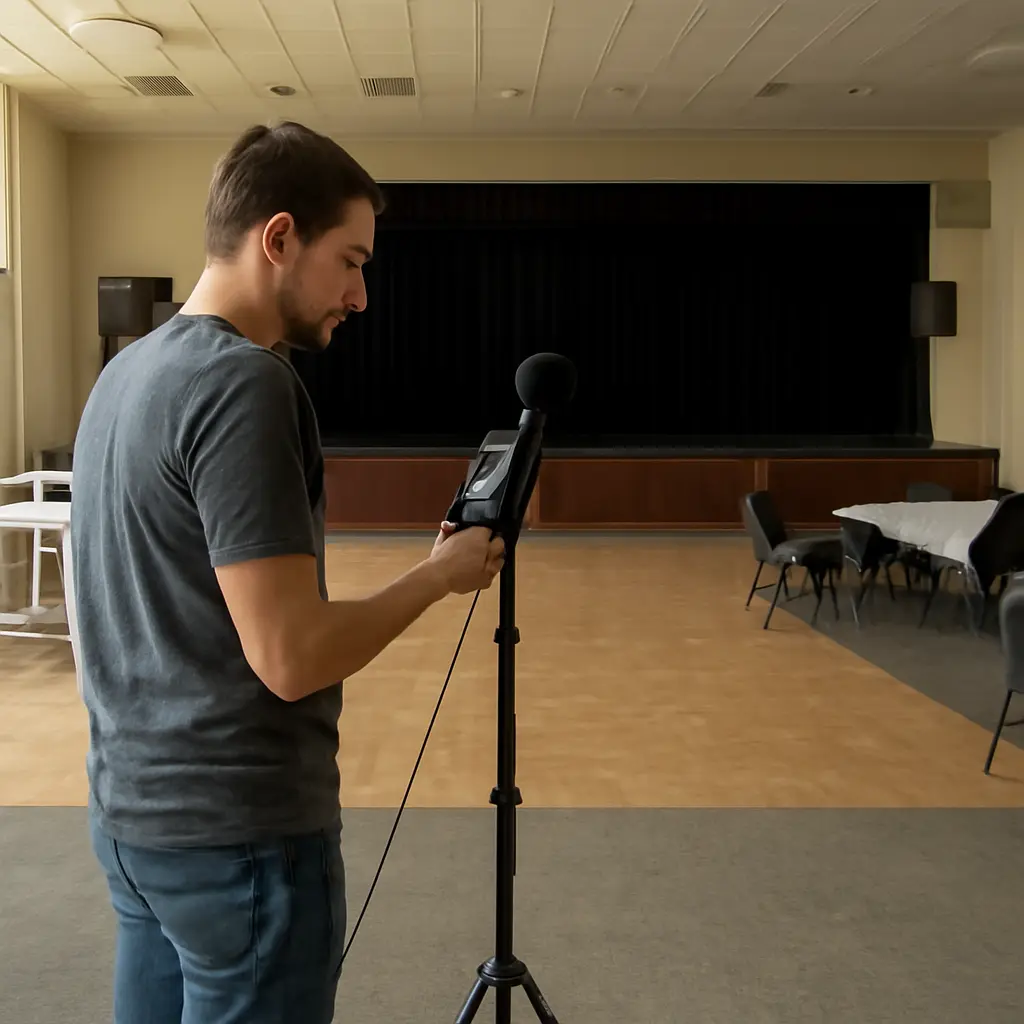
The WHO safe-listening standard emphasizes ongoing sound-level monitoring rather than relying on a one-time check. A venue can apply that principle by logging readings during different event phases, using a calibrated sound-level meter, and assigning a responsible person to respond when levels rise. Monitoring should include both the audience area and staff work locations, where exposure can last for an entire shift.
Practical volume controls that protect the vibe
Good volume management combines measurement with listening and clear operating procedures. The aim is not to make every venue quiet; it is to make sound fit the purpose of each space and moment.
- Measure sound in more than one location, including near speakers, at the back of the room, and in staff work areas.
- Set event-specific targets and use a calibrated meter to monitor levels throughout the night.
- Use speaker placement and separate audio zones to reduce hot spots and preserve quieter areas.
- Plan volume changes for arrivals, speeches, performances, and late-night dancing rather than making abrupt adjustments.
- Provide hearing protection and a quieter area where appropriate, and train staff to report uncomfortable or excessive levels.
A simple venue audit can record time, location, sound level, event activity, and any corrective action. Comparing those observations across events can reveal whether complaints cluster near particular speakers, during certain sets, or at specific points in the night. This turns volume from a subjective last-minute decision into a repeatable part of event planning.
Conclusion: Make venue volume serve the experience
The three volume mistakes are equating loudness with excitement, using one level across an acoustically varied venue, and failing to adjust sound as the event changes. Intentional volume management balances level, coverage, and duration. Venues can protect the vibe—and the people who create it—by measuring sound in multiple areas, monitoring it through the event, and matching the audio plan to each space and activity. Review your next event’s sound plan, consult the WHO safe-listening guidance, and consider a qualified audio or acoustics professional when persistent hot spots or exposure concerns remain.
Sources: World Health Organization, Global Standard for Safe Listening Venues and Events, https://www.who.int/publications/i/item/9789240043114; National Institute for Occupational Safety and Health, Criteria for a Recommended Standard: Occupational Noise Exposure, https://www.cdc.gov/niosh/docs/98-126/; Acoustical Society of America, Acoustics and You: An Introduction to Sound, https://acousticalsociety.org/